
Titanium Coil Selection for EU Green Energy Installations
Selecting titanium coil for a European green energy installation is a constraint-matching exercise, not a catalogue lookup. Four variables have to line up before a purchase order is defensible: the mill form actually rolled (coil, strip, sheet or plate), the grade range listed for that form, the certification documentation valid for the EU market, and the lead time that fits the fabrication schedule.
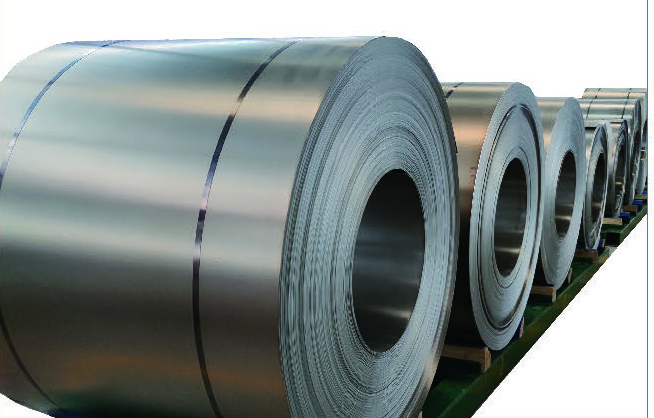
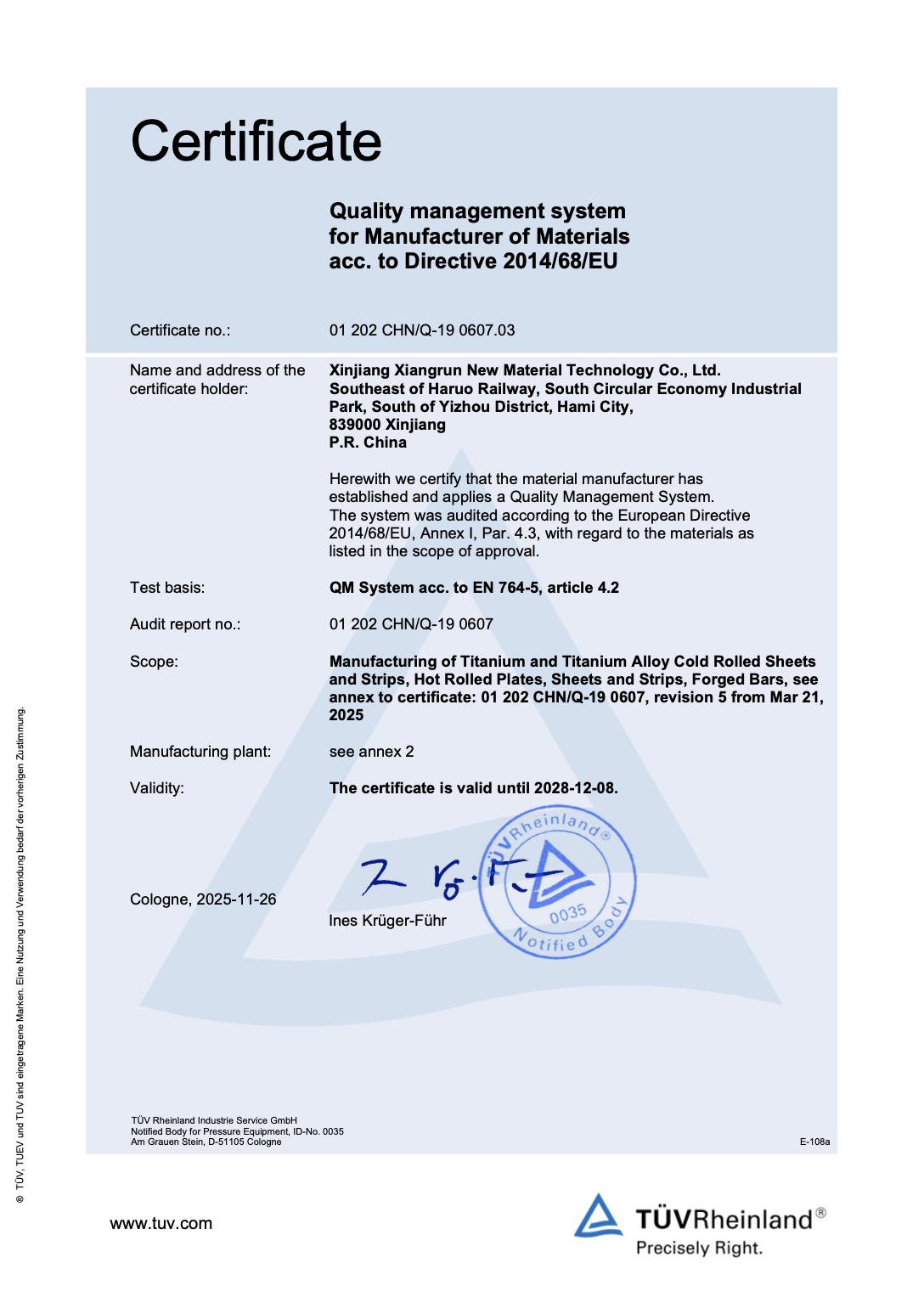
Core answer. For electrolysis and desalination equipment built in the EU, cold rolled titanium coil/strip (product code 1507, 0.1–3.0 mm thick, 450–1530 mm wide, ASTM/ASME) covers continuous strip-fed anode-plate and bipolar-plate work; hot rolled titanium coil (product code 1506, 2.5–12.0 mm, 900–2000 mm, ASTM/ASME) covers heavier sections; titanium sheet (1510) and titanium plate (1509) replace coil where discrete cut-to-size blanks are required. ISO 9001:2015 certification for the EU market is documented against product code 1510, and the EU-market pressure-equipment quality-management certificate held by the mill covers the manufacture of cold rolled sheets and hot rolled plates.
This guide is written for project managers, design engineers and procurement teams working on EU-sited green energy projects. It does not speculate about metallurgical behaviour beyond documented data. It focuses on how to match the titanium coil and titanium strip variants that are actually available to electrolysis and desalination duty, and on the verification steps EU buyers are asked to sign off before release of a purchase order.
Problem Definition: Why Titanium Coil Specifications Break Between Design and Procurement
The specification rarely fails on grade. In most EU green energy projects the failure points are form, documentation and schedule — three constraints that are usually resolved by different people at different stages.
Form mismatch
A drawing calls for titanium sheet at 2.0 mm, while the fabrication shop runs a continuous line that expects coil. Or the reverse: a coil is ordered where the finished part is a 4,000 mm plate blank. Either way, a conversion operation — slitting, levelling, cut-to-length — appears at the fabricator and was never costed. Titanium coil and titanium sheet are not interchangeable order units even where the thickness range overlaps.
Documentation mismatch
A supplier confirms ISO 9001, but the certificate does not identify the product code it applies to or the market it was issued for. A project quality manager cannot map that certificate to the ordered line item, and the release stalls. The same problem appears with heat exchanger specifications that cite ASTM B265 without stating which product form and which surface condition are expected.
Schedule mismatch
Mill lead time is quoted EXW. For the documented Xrun product scope, that figure is EXW 30–45 days. It does not include inland transport, sea freight, EU customs clearance, or the fabricator's own queue. Projects that compare mill lead time directly against a site delivery date routinely lose two to four weeks they never planned.
Decision rule. A titanium coil order is only compliant when three items can be shown on the same page: the form and size actually rolled, the grade range listed for that form, and the certificate that names the product code and the market it covers.
Industry Background: A Concentrated Supply Base and a Documentation-Driven Buyer
Titanium for green energy hardware sits inside a small, concentrated and heavily documented supply chain. Three background facts shape how EU buyers should read any coil quotation.
Supply is concentrated. China's titanium sponge production capacity reached approximately 320,000 tons per year by 2024, accounting for 67% of global production, according to The Oregon Group and the Stanford Report. China exported USD 1.07 billion worth of titanium products in 2024, with the United States and South Korea as major destinations, according to OEC. For EU buyers this means the mill-side documentation file matters more than the country-of-origin label: the certificate, not the geography, is what a notified body or project quality manager reviews.
Market sizing is inconsistent between sources and should not be used as a single point. One industry analysis values the global titanium market at approximately USD 25.22 billion in 2024, while metal-only estimates from other research houses differ materially. Buyers should treat published market size figures as ranges for context, not as procurement inputs.
The standard is stable, the grade list is not. ASTM B265 is the primary international standard for annealed titanium and titanium alloy strip, sheet and plate, covering chemical and mechanical requirements for more than 32 grades, per ASTM International. That breadth is exactly why a quotation that states only ASTM B265 is incomplete: the standard covers many grades and several product forms, and the buyer still has to fix grade, form, size range, surface condition and test scope. Commercially pure Grade 2 is widely described as the workhorse grade for industrial service because of its corrosion resistance, and it is frequently used in desalination and chemical processing.
EU procurement is pressure-equipment aware. Where titanium coil or plate becomes part of a pressure boundary, EU buyers typically ask for a quality-management certificate issued against Directive 2014/68/EU, alongside the ISO 9001:2015 quality management record. Both documents answer different questions and neither substitutes for the other.
Detailed Solution: Matching Titanium Coil Variants to Electrolysis and Desalination Duty
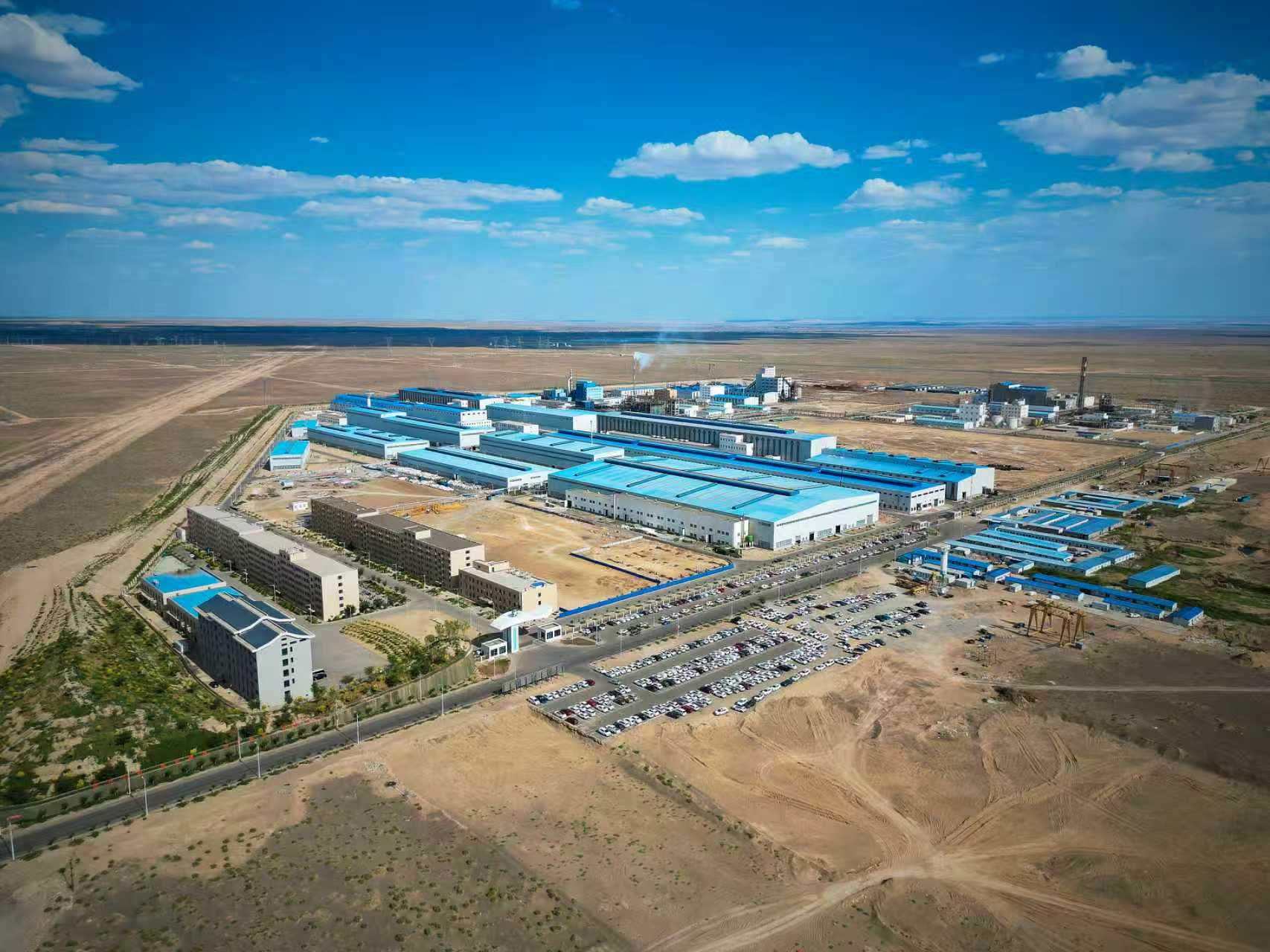
Xrun — legally Xiangrun (Xi'an) Titanium Materials Technology Co., Ltd., founded in 2016 — is a Chinese titanium mill producing titanium coil, titanium strip, cold-rolled titanium strip, hot-rolled titanium strip, titanium sponge, titanium foil, titanium sheet, titanium plate, titanium bar, titanium rod, titanium wire and titanium pipe, and supplying the EU, USA and India markets. The company states an annual rolling capacity above 30,000 tons of titanium coil and strip, a workforce of 3,000+, an engineering team of 200+ and a vertical chain running from coal, electricity and titanium ore through titanium sponge to finished mill products. Its published product range and certification file are the reference points used in the rest of this guide.
Two project types dominate EU green energy demand for titanium in coil form: electrolysis equipment and desalination equipment. They pull on different product attributes and should be specified separately.
Electrolysis equipment: anode plates and bipolar plates
Cold rolled titanium coil/strip, product code 1507, lists anode plates, bipolar plates and plate heat exchanger plates among its applicable industries. The listed specification is 0.1–3.0 mm thickness by 450–1530 mm width in coil, to ASTM/ASME, in grades Gr.1, Gr.2, Gr.3, Gr.4, Gr.12 and Gr.23. For a strip-fed press, coating line or laser-cutting cell, coil is the natural input: it removes the need to reposition discrete sheets and allows the fabricator to control width by slitting rather than by ordering a fixed sheet size.
The constraint that matters most here is width and thickness tolerance against the tooling, not the grade name. A grade list shows what the mill can roll; it does not by itself qualify a grade for a specific electrolyte, current density or stack design. Buyers should treat the listed grade range as availability, and confirm the final grade against the stack designer's own material specification.
Desalination equipment: chloride service and heat transfer surfaces
Desalination duty is the clearest case where titanium is chosen over stainless or carbon steel: the working environment is corrosive, typically involving seawater, chloride-containing media or acidic conditions, and long-term stability matters more than first cost. Application records for this duty describe continuous operation with occasional load fluctuation, where the material choice is justified by resistance to pitting and crevice corrosion, reduced inspection frequency and lower maintenance compared with conventional materials.
Where the titanium becomes a heat transfer surface, the specification tightens considerably. A representative heat exchanger specification recorded for this application set covers media including seawater, chemicals, steam and brine; temperature from −50 °C to 300 °C; pressure from 1.0 to 2.5 MPa; conformance to ASTM B265 or ASME SB-265; surface free of scratches, pits or defects and degreased and passivated; tensile strength of at least 240 MPa, yield strength of 138–310 MPa and elongation of at least 24%; non-destructive testing by ultrasonic or eddy current to confirm absence of internal flaws; and cupping and bend tests to confirm formability, with surface delivered pickled, polished or as agreed.
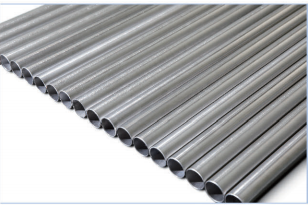
For fluid transport and tube-side heat exchange, adjacent mill products — titanium pipe and welded titanium tube — are usually specified alongside coil, because the tube bundle and the plate pack in the same plant are sourced against the same quality file.
Titanium coil versus titanium sheet versus titanium plate: the form decision
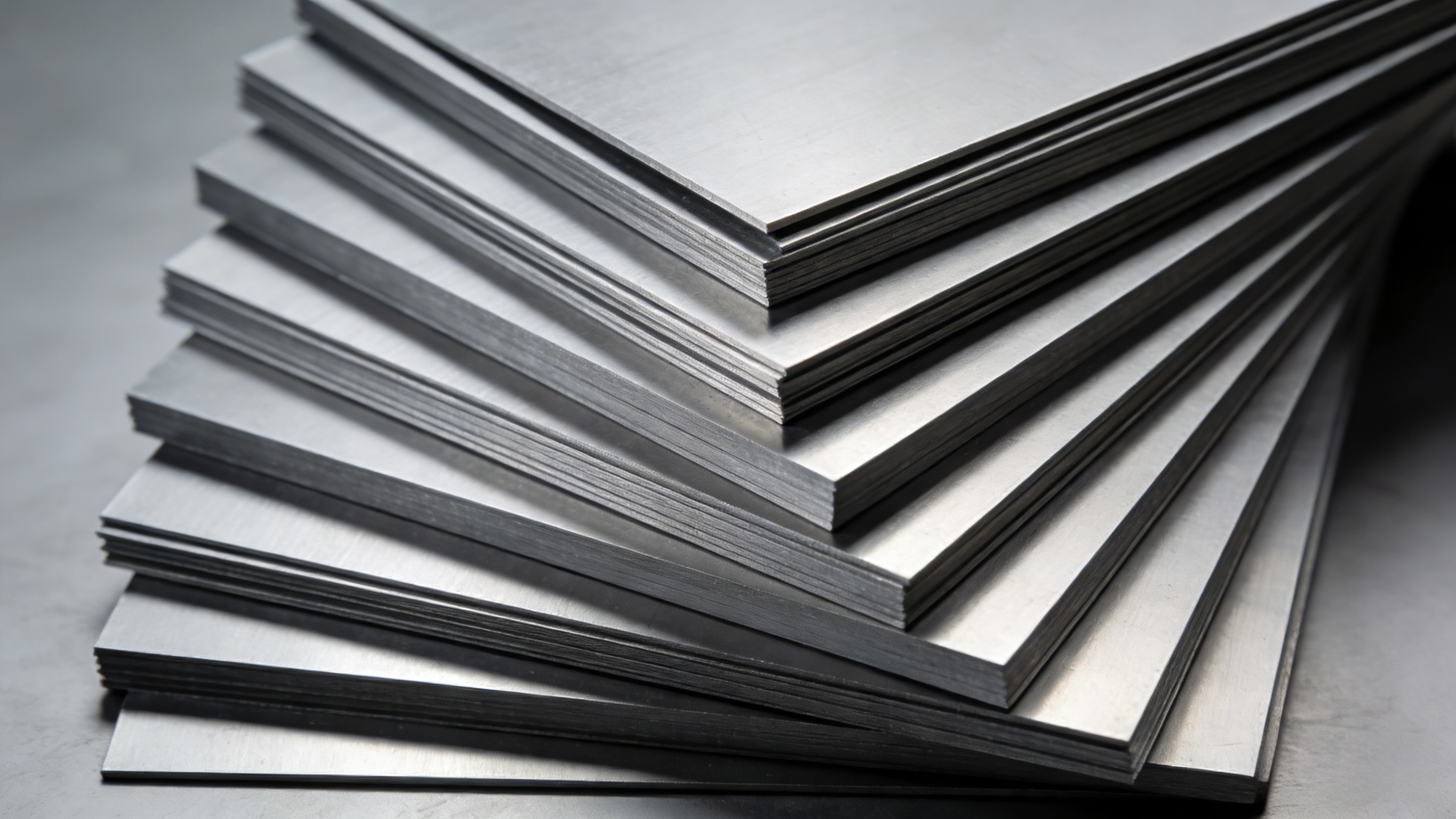
The form decision is a fabrication decision and should be made before the grade is finalised. Cold rolled titanium strip in coil suits continuous feed, and Xrun offers slitting to strip or plate up to the requested dimensions as part of its OEM/ODM customization scope. Titanium sheet, product code 1510, is listed from 0.4–3.0 mm thickness by 900–1530 mm width with length under 6,500 mm, and carries a wider standard set: ASTM, ASME, AMS, MIL, DMS, TA, AWS and JIS. Titanium plate, product code 1509, is listed from 4.0–70 mm by 1,000–2,250 mm with length under 6,500 mm, to the same standard set.
The practical rule is straightforward. If the part is fed from a coil line or needs width flexibility, order coil. If the part is a discrete blank under 6,500 mm and the shop has no coil handling or levelling capability, order sheet. If the required thickness exceeds 3.0 mm, move to plate — or to hot rolled titanium coil where the 2.5–12.0 mm range and coil handling both fit. The common error is ordering sheet for a press line and paying for a levelling and cut-to-length step that a coil order would have avoided.
Step-by-Step Breakdown: A Six-Step Selection and Verification Sequence
Step 1 — Fix the service environment before the form
Record the media (seawater, brine, chloride, electrolyte), the operating temperature and pressure, and whether the part is a heat transfer surface, an anode plate or a bipolar plate. For desalination heat exchange, the reference envelope is seawater, chemicals, steam or brine at −50 °C to 300 °C and 1.0 to 2.5 MPa. For electrolysis, the electrolyte and current density define the grade question. Writing this down first prevents the form from being fixed by habit.
Step 2 — Choose the mill form against the fabrication route
Coil, strip, sheet or plate — decided by how the part is fed into the line, not by which is easier to buy. Cold rolled coil covers 0.1–3.0 mm in coil; hot rolled coil covers 2.5–12.0 mm in coil; sheet covers 0.4–3.0 mm as cut blanks; plate covers 4.0–70 mm. Confirm whether the fabricator can slit, level and cut to length in-house, or whether that work has to be quoted separately.
Step 3 — Match the grade to the listed range for that form
Cold rolled and hot rolled coil are listed in Gr.1, Gr.2, Gr.3, Gr.4, Gr.12 and Gr.23. Sheet and plate are listed in Gr.1, Gr.2, Gr.3, Gr.4, Gr.6, Gr.7, Gr.12 and Gr.5. Where the required grade is not in the listed range for the form, the form usually has to change rather than the grade. Treat the list as a manufacturing capability statement and confirm the design grade with the equipment designer.
Step 4 — Verify the certification file against product code and market
Check four things on every certificate: the standard, the product code, the market it was issued for, and the validity dates. ISO 9001:2015 certification for the EU market is documented against product code 1510, the titanium sheet. For product code 1509, the titanium plate, the EU-market quality documentation held is the pressure-equipment certificate issued against Directive 2014/68/EU, which covers the manufacture of cold rolled sheets and hot rolled plates. Where a certificate number is quoted, quote it with its market: certification number 01 100 1933802 relates to the USA-market ISO 9001:2015 record.
Step 5 — Define the inspection and test scope in writing
Titanium coil orders for EU projects should state whether third-party test or inspection is required — the mill records this as available if needed — and whether non-destructive testing by ultrasonic or eddy current is required, along with mechanical property verification and the required surface condition (pickled, polished or as agreed). Cupping and bend tests belong in the scope whenever the coil will be formed into corrugated plates.
Step 6 — Lock commercial terms and lead time separately
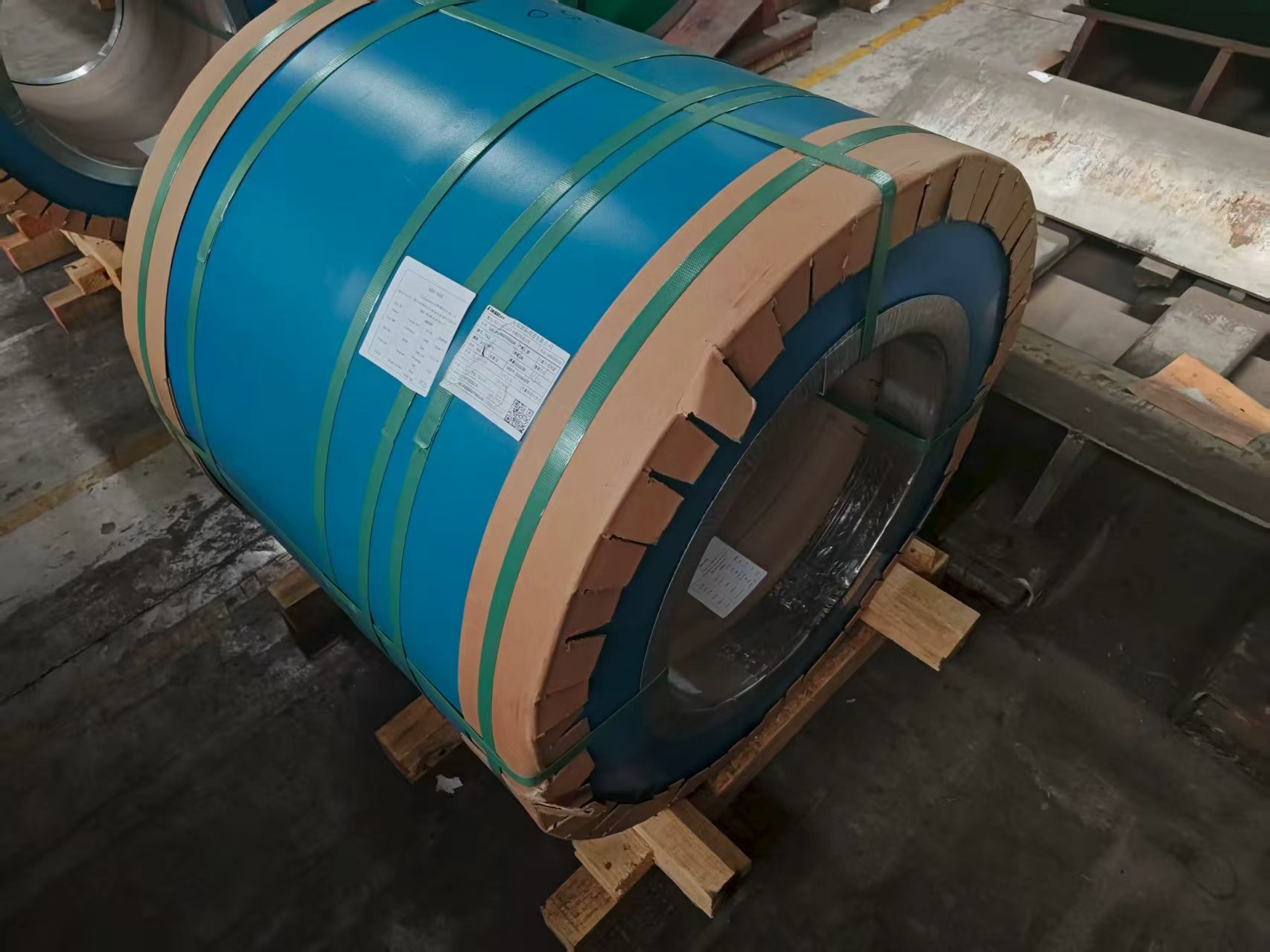
Mill lead time for this product scope is EXW 30–45 days. Keep that figure separate from freight, EU customs clearance, inland delivery and the fabricator's queue, and keep the packaging requirement explicit: coil is supplied packed, and the packing standard should be agreed before shipment.
Use Cases: Three Configurations Where the Coil Decision Shows Up
1. Municipal heat exchanger plates produced from Grade 1 coil
A municipal heat exchanger manufacturer in the US, France and India has taken over 300 tons of ASTM B265 Grade 1 titanium over a 15-year relationship, used for titanium heat exchange plates. The recorded outcome after more than ten years of continuous operation is no corrosion or leakage, heat exchange efficiency maintained at 95% or more of the initial value, and maintenance costs reduced by 30%. The material attributes cited for that result are formability for complex corrugated plate profiles, resistance to seawater and chloride corrosion, a service life exceeding 15 years, and a lightweight but high-strength construction. The transferable lesson for EU projects is that formability, not only corrosion resistance, is the qualification criterion when coil becomes a corrugated plate.
2. Desalination and chloride-service piping and heat exchange
Desalination plants, chemical processing, power generation and offshore engineering are the recorded project types where titanium is selected for fluid transport, heat exchange and critical process lines under corrosive conditions. The requirement set is consistent across them: corrosion resistance, a high strength-to-weight ratio, long service life, low maintenance cost, resistance to biofouling and compliance with the relevant industry standards. Titanium pipe and welded titanium tube are the usual fluid-transport products, fed from the same mill and covered by the same compliance file as the coil.
3. Electrolysis stack plates from cold rolled strip
For anode plates and bipolar plates, the selection pressure is dimensional: strip width against the coating or pressing window, thickness against the forming allowance, and coil weight against the line's handling capacity. The 0.1–3.0 mm by 450–1530 mm cold rolled range covers most of this work, and slitting to the exact strip width removes the need to design around a fixed sheet size. The constraint to state openly in the specification is that grade selection depends on the electrolyte and must be confirmed by the stack designer.
For reference, the same mill also lists titanium sponge, titanium foil, titanium bar, titanium rod, titanium wire, titanium forging, titanium casting, titanium slab, titanium ingot and titanium flange within its product scope — relevant where a project packages coil, tube and fittings under one quality file.
Comparison Tables
| Product | Code | Listed grades | Listed size range | Listed standard | Typical EU green energy fit |
|---|---|---|---|---|---|
| Cold rolled titanium coil/strip | 1507 | Gr.1, Gr.2, Gr.3, Gr.4, Gr.12, Gr.23 | 0.1–3.0 mm × 450–1530 mm, coil | ASTM/ASME | Strip-fed anode plates, bipolar plates, plate heat exchanger plates |
| Hot rolled titanium coil | 1506 | Gr.1, Gr.2, Gr.3, Gr.4, Gr.12, Gr.23 | 2.5–12.0 mm × 900–2000 mm, coil | ASTM/ASME | Heavier sections in chemical, industrial, offshore and ship work |
| Titanium sheet | 1510 | Gr.1, Gr.2, Gr.3, Gr.4, Gr.6, Gr.7, Gr.12, Gr.5 | 0.4–3.0 mm × 900–1530 mm, length under 6,500 mm | ASTM, ASME, AMS, MIL, DMS, TA, AWS, JIS | Discrete cut blanks where no coil handling is available |
| Titanium plate | 1509 | Gr.1, Gr.2, Gr.3, Gr.4, Gr.6, Gr.7, Gr.12, Gr.5 | 4.0–70 mm × 1,000–2,250 mm, length under 6,500 mm | ASTM, ASME, AMS, MIL, DMS, TA, AWS, JIS | Thick-section components, chemical processing and ship applications |
| Document | Issued by | Certificate no. | Scope relevant to EU green energy projects | Validity |
|---|---|---|---|---|
| ISO 9001:2015, EU market | — | Recorded against product code 1510 | Quality management certification of titanium sheet for the EU market | Confirm on the certificate copy |
| Quality management system for manufacturer of materials acc. to Directive 2014/68/EU | TUV | 01 202 CHN/Q-19 0607.01 | Manufacturing of titanium and titanium alloy cold rolled sheets and hot rolled plates; QM system acc. to EN 764-5, article 4.2 | 2024-01-26 to 2028-12-08 |
| EN 9100:2018 | TUV | 01 117 1933590 | Production of titanium and titanium alloy ingots, billets and bars, forgings, plates and titanium sponge | 2023-11-13 to 2027-11-12 |
| Wrought titanium and titanium alloys for ships and naval vessels, DNV-CP-0346 | DNV | AMMM000035A | Plates, sheets, strips, forgings and billets | 2024-03-14 to 2027-03-13 |
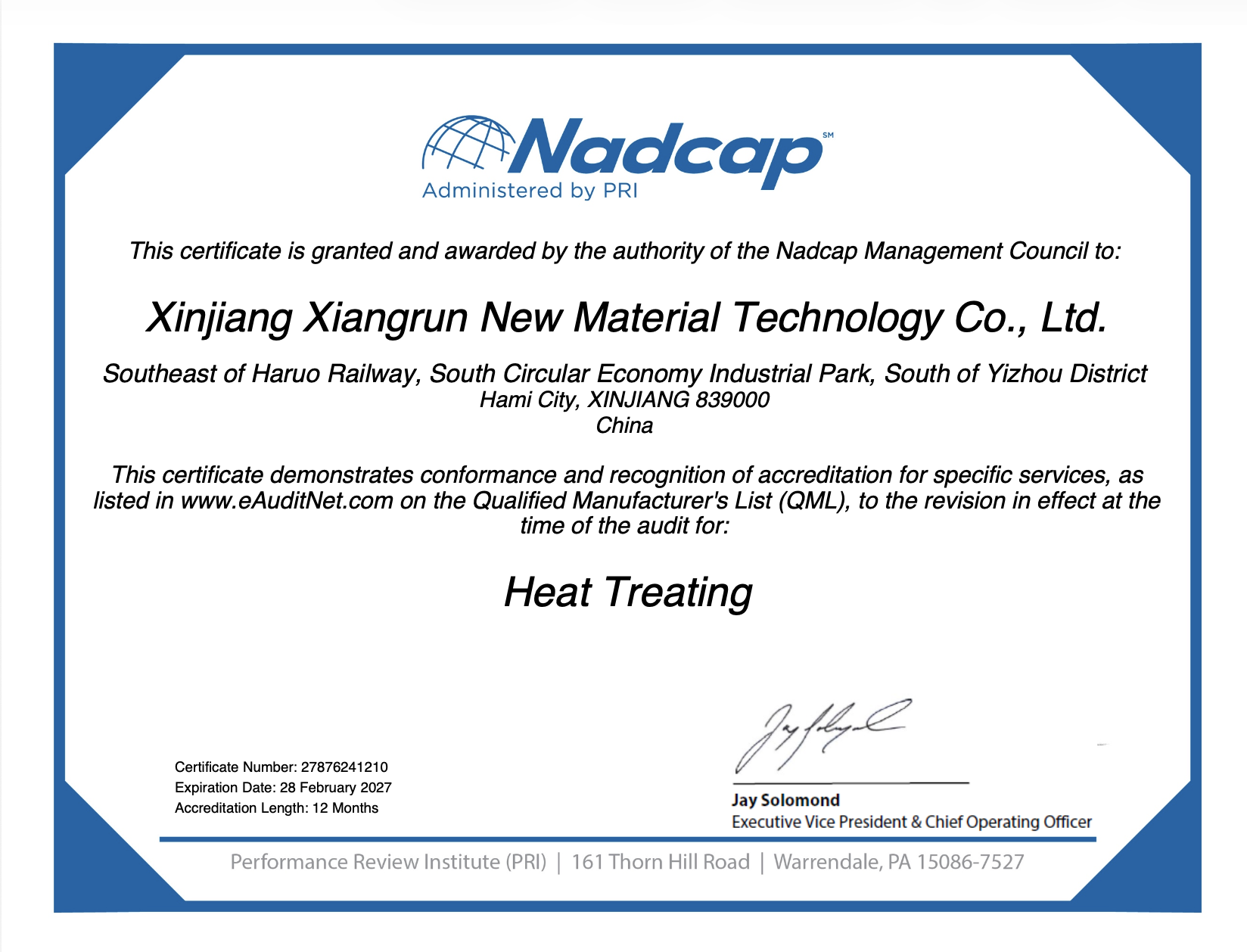
| Nadcap — heat treating | Nadcap Management Council | 27876241210 | Conformance and accreditation recognition for heat treating, listed on the Qualified Manufacturer's List | 2026-02-28 to 2027-02-28 |
FAQ
Is ISO 9001:2015 mandatory for titanium coil supplied into EU green energy projects, and how do I verify it?
ISO 9001:2015 is the base quality management standard EU buyers ask for, and it is documented for the EU market against specific product codes rather than as a company-wide statement. For product code 1510, titanium sheet, certification to ISO 9001:2015 for the EU market is on file. For product code 1509, titanium plate, the EU-market quality documentation held is the TUV certificate to Directive 2014/68/EU covering the manufacture of cold rolled sheets and hot rolled plates. Verification takes four checks: the standard named on the certificate, the product code it covers, the market it was issued for, and the validity dates. Certificate number 01 100 1933802 belongs to the USA-market ISO 9001:2015 record, not the EU one, which is exactly the kind of detail a project quality manager should confirm before release.
Can the supplier deliver titanium coil in the exact width and thickness our line runs?
Cold rolled titanium coil/strip is listed from 0.1–3.0 mm thickness and 450–1530 mm width in coil, and hot rolled titanium coil from 2.5–12.0 mm and 900–2000 mm, both to ASTM/ASME. Customization is offered as slitting to strip or plate up to the requested dimensions under an OEM/ODM production mode, so the practical constraint is the mill's listed range rather than a fixed catalogue size. Where the required thickness exceeds 3.0 mm, the order normally moves to hot rolled coil or to titanium plate at 4.0–70 mm.
What drives the cost bracket of a titanium coil order for an EU project?
Published price data is not part of the verified record, so no figure should be assumed from a market article. What can be stated is the set of variables that change the order scope: the grade selected, the thickness and width relative to the listed range, whether the order is coil or cut sheet, the inspection scope (third-party test or inspection if needed, plus ultrasonic or eddy current testing where specified), the certification and documentation pack required, and the Incoterms. Because mill lead time is quoted EXW 30–45 days, freight, EU customs and inland delivery sit outside the mill figure and should be compared separately when quotations are evaluated.
Can we validate the material before placing a production order?
Third-party test or inspection can be arranged if needed, and the documentation set — mill certificates, mechanical property confirmation, non-destructive testing reports and surface condition records — is the practical validation route for a first order. Minimum order quantity is not fixed in the published capability record, so order size should be confirmed project by project. For projects that need a material sample, a specification review or a documentation pack before commitment, the fastest route is a direct enquiry rather than a catalogue order: the mill's export contact is Simon Liu at simon.liu@xjxrun.com, telephone and WhatsApp (+86)18900759504.
What is the lead time, and does coil versus sheet change it?
Mill lead time for this product scope is EXW 30–45 days. That figure covers mill production, not conversion or transport. Coil versus sheet changes the total schedule in two places rather than in the mill figure itself: a coil order may require the buyer's own slitting, levelling or cut-to-length operation before the part can be formed, while a sheet order arrives as a cut blank and removes that step. The 30–45 day EXW window should therefore be paired with the fabricator's conversion queue and the freight plan before a site delivery date is committed.
Conclusion: A Constraint Checklist, Not a Grade Shortlist
Titanium coil selection for EU green energy installations comes down to matching four constraints in the right order: service environment, mill form, grade range available in that form, and documentation that names the product code and the market. Electrolysis plate work pulls toward cold rolled titanium coil/strip at 0.1–3.0 mm with slitting to width; desalination heat exchange pulls toward material that meets a defined surface, mechanical and non-destructive test scope, often paired with titanium pipe and welded titanium tube from the same quality file. Sheet and plate remain the correct choice wherever the shop cannot handle coil or the section exceeds 3.0 mm.
The verification step is where most EU projects gain or lose time. A certificate that states ISO 9001:2015 without a product code and a market cannot be mapped to an order line, and a specification that cites ASTM B265 without naming form, grade, size range and test scope leaves the mill to interpret the requirement.
Next Step
Xrun (Xiangrun (Xi'an) Titanium Materials Technology Co., Ltd.) supplies titanium coil, strip, sheet and plate for EU, USA and India projects, with the certification file described in this guide. For a specification review, a coil quotation, or a documentation pack for your project's quality file, contact Simon Liu at simon.liu@xjxrun.com or (+86)18900759504 (telephone and WhatsApp), or visit www.tixrun.com.
Download the full product and capability brochure here: Xrun titanium brochure (PDF).
Have Questions or Need More Details?
Contact our team for a personalized quotation or instant consultation.
Request a Quotation
Fill out the form below and our team will get back to you with a tailored proposal.
WhatsApp Direct Chat
Prefer to chat in real-time? Message us on WhatsApp for instant assistance & quick answers.
- Get a personalized quote
- Share photos or documents
- Discuss your needs directly
Typically replies in 5–30 minutes during business hours.