
Supplier Audit: Matching Titanium Coil Product Codes to ISO 9001:2015 Market Certifications
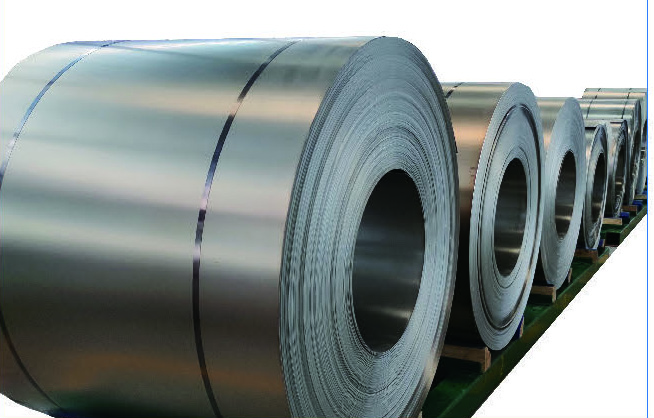
A titanium supplier's ISO 9001:2015 certificate is only as useful as the line items inside it. During a supplier audit, the decisive information is not the standard printed on the front page. It is the product codes listed in the certification scope, because those codes define which material forms the supplier's quality system has actually been assessed against, and, where the certificate is market-specific, which destination market that assessment covers.
This guide is written for buyers in the research and evaluation stage: engineers, quality managers and procurement teams who have to justify a supplier decision with documents rather than adjectives. It works through a code-level audit method using four certification scope lines held by Xrun, the brand of Xiangrun (Xi'an) Titanium Materials Technology Co., Ltd., a China-based titanium materials manufacturer founded in 2016 whose product range covers titanium strip, coil, sponge, cold-rolled and hot-rolled strip, foil, plate, sheet, bar, rod, wire and pipe, and whose stated main markets are the EU, USA and India.
The four lines are: EU certification covering product code 1510 (Titanium Sheet); USA certification covering product code 1506 (Hot rolled titanium coil), certificate number 01 100 1933802, and sheet; India TUV certification covering product code 1507 (Cold rolled titanium coil/strip), and sheet; and EU certification covering product code 1509 (Titanium Plate).
The purpose of the exercise is not to accept a certificate as a badge. It is to test whether the certificate's product codes line up with the form you are buying and the market you are shipping into, and to know exactly what to request when they do not.
What a Product Code on an ISO 9001:2015 Certificate Actually Tells You
A product code in a certification scope is a boundary marker, not a decoration. It states that the supplier's quality management system has been audited for that defined product category, for instance cold-rolled titanium coil/strip as a category distinct from titanium plate. Two suppliers can both display the words ISO 9001:2015 certified and still have very different audit relevance for the same project, because one scope may cover the form you are buying while the other covers forms you will never order.
The first failure mode in supplier documentation is scope mismatch. The certificate is genuine, current and issued by a recognised body, but the scope lines do not include the material form being quoted. A buyer purchasing cold-rolled titanium coil/strip for a plate heat exchanger programme is not protected by a certificate that lists only plate.
The second is entity mismatch. Certificates are issued to a legal entity and a site. If the quotation comes from one company and the certificate belongs to another, the scope evidence does not automatically transfer with the price.
The third is category confusion, and it is the most common. ISO 9001:2015 is a quality management system standard. It describes how a supplier plans, controls, measures and improves its processes. It does not certify the chemistry, mechanical properties or dimensional accuracy of an individual coil. Treating a QMS certificate as a material certificate is the most expensive misunderstanding in titanium procurement, because it creates the impression that product-level verification has already been done.
Why Titanium Coil Buyers Audit Certification Scope in 2026
Titanium is specified where conventional materials struggle. Under corrosive conditions such as seawater, chloride-bearing media and acidic environments, titanium is preferred over stainless steel or carbon steel for its resistance to pitting and crevice corrosion, and it appears in chemical processing, desalination, power generation and offshore engineering projects. Those are long-life assets, which is why material selection is a document-heavy decision rather than a purely commercial one.
Supply scale reinforces the point. The global titanium market was valued at approximately USD 25.22 billion in 2024 in industry analysis, although published estimates vary widely depending on whether titanium metal or titanium-bearing commodities are counted. China's titanium sponge production capacity reached roughly 320,000 tons per year by 2024, about 67% of global production, according to The Oregon Group / Stanford Report, and China exported USD 1.07 billion worth of titanium products in 2024, with the United States and South Korea among the major destinations, according to OEC (Observatory of Economic Complexity).
When a large share of global supply sits in one region, the buyer's practical control point moves to documentation. Grade 2 commercially pure titanium is the workhorse grade for industrial applications such as desalination and chemical processing because of its corrosion resistance, per Piping & Pipeline Engineering, while ASTM B265 is the primary international standard for annealed titanium and titanium alloy strip, sheet and plate, covering chemical and mechanical requirements for more than 32 grades, per ASTM International.
Against that background, a certification scope line keyed to a product code does something specific and limited. It tells you that an accredited body has audited the supplier's system for that material category, in that market context where applicable. That is precisely the kind of evidence a buyer needs between research and evaluation: narrow, checkable and verifiable by a third party.
The Four Certification Scope Lines, Decoded
The certification set used as the worked example in this guide contains four market-specific scope lines. Each one pairs a destination market with a product code and a material form, which is why the same supplier can hold four different audit answers depending on what you are buying and where it ships.
| Destination market | Certification | Product code | Material form named in the scope |
|---|---|---|---|
| EU | ISO 9001:2015 certification | 1510 | Titanium Sheet |
| USA | ISO 9001:2015 certification, certificate number 01 100 1933802 | 1506 | Hot rolled titanium coil; sheet |
| India | TUV ISO 9001:2015 certification | 1507 | Cold rolled titanium coil/strip; sheet |
| EU | ISO 9001:2015 certification | 1509 | Titanium Plate |
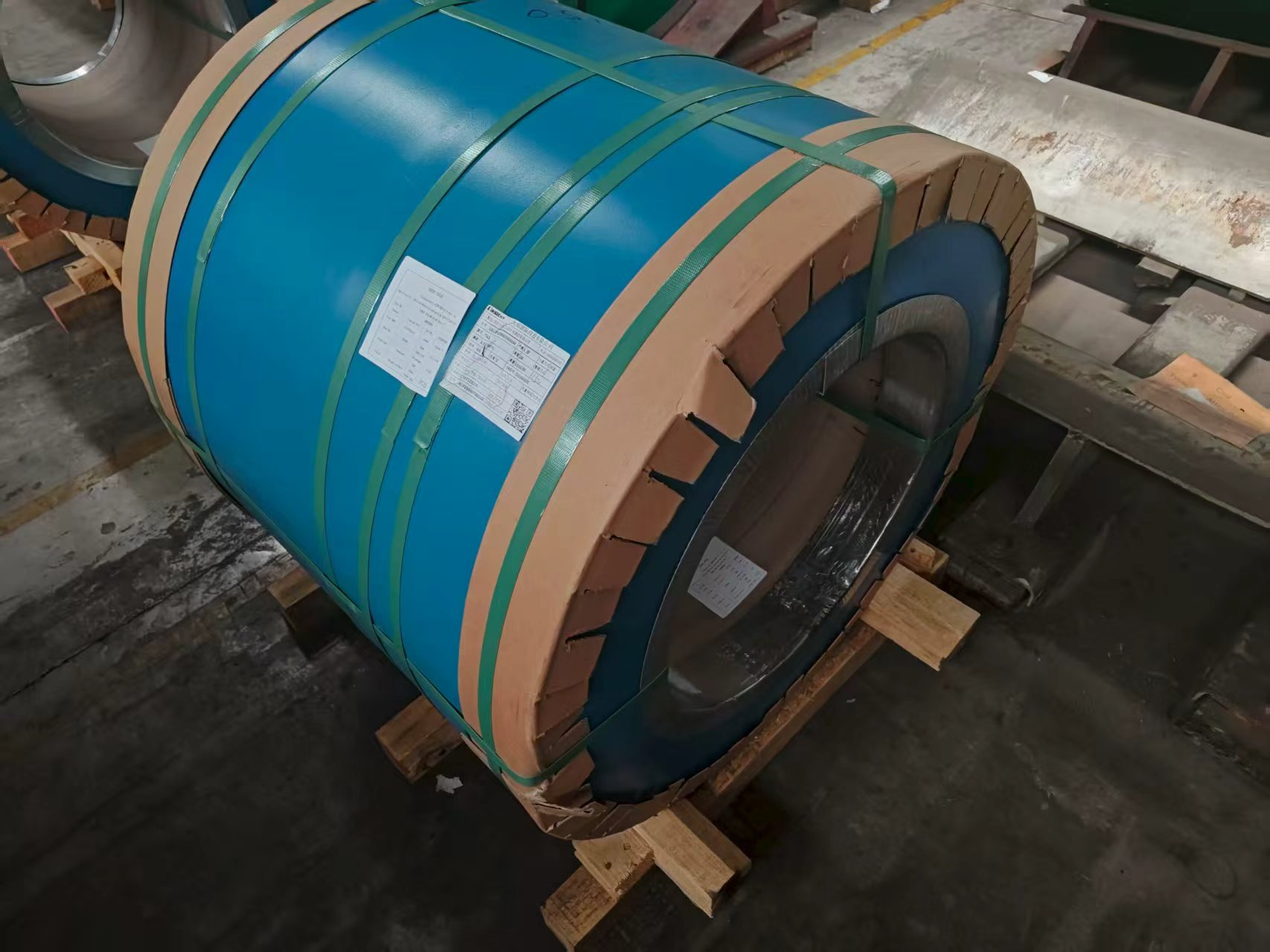
EU certification - product code 1510 (Titanium Sheet)
Product code 1510 maps to Titanium Sheet. For an EU-bound sheet programme, the audit question is whether the sheet form appears in the certified scope under code 1510, not whether the supplier is certified for titanium in general. The form itself is offered in 0.4 to 3.0 mm thickness and 900 to 1530 mm width, with length under 6,500 mm, in grades Gr.1, Gr.2, Gr.3, Gr.4, Gr.6, Gr.7, Gr.12 and Gr.5, produced to ASTM, ASME, AMS, MIL, DMS, TA, AWS and JIS references. Its documented application base includes electronic products, plate heat exchanger plates, anode plates, bipolar plates, batteries, eyeglass frames and household products.
USA certification - product code 1506 (Hot rolled titanium coil), certificate number 01 100 1933802, and sheet
Product code 1506 maps to Hot rolled titanium coil, with sheet also named on the scope. The form is offered in 2.5 to 12.0 mm thickness and 900 to 2000 mm width in coil, in grades Gr.1, Gr.2, Gr.3, Gr.4, Gr.12 and Gr.23, produced to ASTM/ASME, with chemical processing and industrial, aerospace and ship applications. The certificate number to record in the audit file is 01 100 1933802. Recording the number matters, because it allows the buyer or quality team to verify the certificate with the issuing body instead of verifying a scanned page.
India TUV certification - product code 1507 (Cold rolled titanium coil/strip), and sheet
Product code 1507 maps to Cold rolled titanium coil/strip, with sheet also named on the scope. The form is offered in 0.1 to 3.0 mm thickness and 450 to 1530 mm width in coil, in grades Gr.1, Gr.2, Gr.3, Gr.4, Gr.12 and Gr.23, produced to ASTM/ASME, with a documented application base covering electronic products, plate heat exchanger plates, anode plates, bipolar plates, batteries, eyeglass frames and household products. Where the destination market is India, the scope evidence to request is the TUV-issued ISO 9001:2015 certification covering code 1507 and sheet.
EU certification - product code 1509 (Titanium Plate)
Product code 1509 maps to Titanium Plate, offered in 4.0 to 70 mm thickness and 1000 to 2250 mm width with length under 6,500 mm, in grades Gr.1, Gr.2, Gr.3, Gr.4, Gr.6, Gr.7, Gr.12 and Gr.5, produced to ASTM, ASME, AMS, MIL, DMS, TA, AWS and JIS references, with chemical processing and industrial, aerospace and ship applications. For EU projects that combine forms in a single purchase order, note that two separate scope lines can be involved, 1510 for sheet and 1509 for plate, and each should be checked individually.
Specification snapshot: which code covers which form
| Product code | Material form | Grades | Size range | Standards | Documented application base |
|---|---|---|---|---|---|
| 1507 | Cold rolled titanium coil/strip | Gr.1, Gr.2, Gr.3, Gr.4, Gr.12, Gr.23 | 0.1-3.0 mm thickness x 450-1530 mm width, coil | ASTM/ASME | Electronic products, plate heat exchanger plates, anode plates, bipolar plates, batteries, eyeglass frames, household products |
| 1506 | Hot rolled titanium coil | Gr.1, Gr.2, Gr.3, Gr.4, Gr.12, Gr.23 | 2.5-12.0 mm thickness x 900-2000 mm width, coil | ASTM/ASME | Chemical processing and industrial, aerospace, ship |
| 1510 | Titanium Sheet | Gr.1, Gr.2, Gr.3, Gr.4, Gr.6, Gr.7, Gr.12, Gr.5 | 0.4-3.0 mm thickness x 900-1530 mm width, length < 6500 mm | ASTM, ASME, AMS, MIL, DMS, TA, AWS, JIS | Electronic products, plate heat exchanger plates, anode plates, bipolar plates, batteries, eyeglass frames, household products |
| 1509 | Titanium Plate | Gr.1, Gr.2, Gr.3, Gr.4, Gr.6, Gr.7, Gr.12, Gr.5 | 4.0-70 mm thickness x 1000-2250 mm width, length < 6500 mm | ASTM, ASME, AMS, MIL, DMS, TA, AWS, JIS | Chemical processing and industrial, aerospace, ship |
Read the table as a matching tool, not as a product list. The left-hand column is the identifier that must appear in a certification scope; the columns on the right describe the form that the identifier represents. Neither substitutes for the other, and a supplier that cannot show the code for your form cannot use its certificate to answer your audit question.
Step-by-Step: How to Run the Product-Code Audit
- Step 1 - Define the form, grade, size and destination before you request anything. Write down what you are buying: cold-rolled coil/strip, hot-rolled coil, sheet or plate; the grade; the thickness, width and length or coil limits; and the destination market. Without this baseline the audit has no reference point. A heat exchanger programme specifying ASTM B265 Grade 1 sheet for seawater duty at minus 50 to 300 degrees Celsius and 1.0 to 2.5 MPa is a different audit question from a chemical plant ordering 6 mm hot-rolled coil.
- Step 2 - Request the certificate, not the logo. Ask for the complete certificate and its scope annex, with the certificate number visible on the document. A badge image is a marketing asset; a numbered certificate with scope lines is audit evidence.
- Step 3 - Match the scope line to your form and market. Use the four-code map: 1510 for sheet into the EU, 1506 for hot-rolled coil and sheet into the USA, 1507 for cold-rolled coil/strip and sheet into India, 1509 for plate into the EU. If a single project uses several forms, check every form separately, because one matching code does not validate the rest of the order.
- Step 4 - Verify the issuer, the number and the legal entity. Confirm the certificate number with the issuing body. For the USA scope in this set the number is 01 100 1933802, and the India scope is TUV-issued. Then compare the legal entity and site on the certificate against the entity on your quotation, purchase order and shipping documents, since a certificate held by one legal entity does not automatically cover another entity that issues the invoice.
- Step 5 - Build the product-conformity layer separately. The scope answers whether the form sits inside the audited system. It does not answer whether a specific coil meets specification. For that, request mill test certificates referencing ASTM B265 or ASME SB-265, dimensional records against the ordered size range, mechanical property data, and non-destructive testing such as ultrasonic or eddy current inspection where the application requires it. The heat exchange requirement set recorded in this application data includes tensile strength of at least 240 MPa, yield strength of 138 to 310 MPa and elongation of at least 24 percent, together with cupping and bend tests for formability. Third-party testing or inspection can be arranged where a project or end client requires independent verification.
- Step 6 - Reconcile documents at delivery. Before release, check that shipment documents match the audited scope: form, grade, size and coil or heat identification. Certification scope is a pre-qualification filter; delivery documentation is the control that keeps it true.

Use Cases: Where the Product-Code Match Changes the Decision
Heat exchanger plate programmes (USA, France, India)
For plate heat exchangers in seawater and chloride service, the material is usually specified as ASTM B265 Grade 1 sheet or cold-rolled strip because of its formability into complex corrugated plates and its corrosion resistance. One municipal heat exchanger manufacturer, supplied with over 300 tons of titanium heat exchange plate, reported continuous operation for more than 10 years with no corrosion or leakage, heat exchange efficiency maintained at 95 percent or more of its initial value, and maintenance costs reduced by 30 percent, across a 15-year relationship. In audit terms, the forms that matter are sheet, under scope code 1510 for the EU, and cold-rolled coil/strip, under scope code 1507 for India. A general titanium certificate would not have identified either.
Corrosive and seawater piping programmes (USA, France, Germany)
Where titanium pipe is used for fluid transport, heat exchange or critical process lines, the recorded application describes continuous operation under seawater, chloride or acidic media, with temperature and pressure varying by process and long-term stability as the governing requirement. Suppliers of those lines typically fabricate from coil or sheet, which makes the coil-side scope lines, 1507 for cold-rolled coil/strip and 1510 for sheet, the ones to verify before the fabrication chain begins. Traceability has to survive that chain: coil identification created at the mill is only useful if it is still attached to the pipe at delivery.
Chemical processing, aerospace and ship plate work
Plate work such as vessels, linings and heavy structures in chemical processing, industrial, aerospace and ship applications sits under code 1509, while hot-rolled coil under 1506 covers the mid-thickness range from 2.5 mm upward. A buyer who audits only the cold-rolled line and then places a 20 mm plate order has checked the wrong part of the certificate. Matching the code to the form is the whole exercise.
Comparison: What Certification Scope Proves, and What It Does Not
The cleanest way to keep an audit honest is to place the two evidence layers side by side. The left column is what a scope line can carry into a supplier evaluation. The right column is what still has to be requested, tested or inspected separately.
| Scope-level evidence confirms | Scope-level evidence does not confirm |
|---|---|
| The supplier's quality system has been audited for a defined product category, for example code 1507, cold-rolled titanium coil/strip | The chemistry or mechanical results of an individual coil or heat |
| The market context of the assessment, where the certificate is market-specific, such as the EU, USA and India lines in this set | Conformity to ASTM B265 or ASME SB-265 for a specific shipment |
| The legal entity and site to which the certificate was issued | The size, tolerance or surface condition of the delivered material |
| Certificate identity and traceability through a certificate number such as 01 100 1933802 | Commercial terms, lead time or capacity allocation for your specific order |
The two columns are complementary. An audit that stops at the left column accepts capability as conformity. An audit that begins at the right column has no way to filter suppliers before spending money on testing. Run both, in that order, and the supplier shortlist becomes a document decision rather than a preference.
Frequently Asked Questions
Does ISO 9001:2015 certification mean the titanium coil itself complies with ASTM B265?
No. ISO 9001:2015 is a quality management system standard, and a certificate issued against it covers a supplier's processes together with a defined scope of product codes, not the chemistry or mechanical results of a specific coil. ASTM B265 is the primary international standard for annealed titanium and titanium alloy strip, sheet and plate, and it covers chemical and mechanical requirements for more than 32 grades. Product conformity is demonstrated separately, through mill test certificates, dimensional records, mechanical property data and non-destructive testing. In an audit, use the ISO 9001:2015 scope as capability evidence, for example product code 1507 for cold rolled titanium coil/strip under India TUV certification, or product code 1506 for hot rolled titanium coil, certificate number 01 100 1933802, under USA certification, and use product documents for conformity.
What do product codes 1510, 1506, 1507 and 1509 cover?
Each code maps to one material form in Xrun's product structure. Code 1510 is Titanium Sheet, code 1506 is Hot rolled titanium coil with sheet also named on the scope, code 1507 is Cold rolled titanium coil/strip with sheet also named on the scope, and code 1509 is Titanium Plate. Size and grade coverage differ by form. Cold-rolled coil/strip runs from 0.1 to 3.0 mm thickness and 450 to 1530 mm width in grades Gr.1, Gr.2, Gr.3, Gr.4, Gr.12 and Gr.23 to ASTM/ASME. Hot-rolled coil runs from 2.5 to 12.0 mm thickness and 900 to 2000 mm width in the same grades to ASTM/ASME. Sheet runs 0.4 to 3.0 mm thickness and 900 to 1530 mm width to ASTM, ASME, AMS, MIL, DMS, TA, AWS and JIS references. Plate runs 4.0 to 70 mm thickness and 1000 to 2250 mm width to the same standards. Xrun, the brand of Xiangrun (Xi'an) Titanium Materials Technology Co., Ltd., reports capacity of more than 30,000 tons of titanium rolling coils and strips per year, with slitting to strip or plate on request, OEM/ODM production and third-party test or inspection where a project requires it.
How does verifying certification scope affect procurement cost?
Scope verification is a cost-avoidance step rather than a price lever. A scope mismatch, for example ordering cold-rolled strip while the audited scope lists only plate, tends to surface as re-testing, re-documentation or delivery delay, and those costs usually exceed the price difference that triggered the change. Verified material form also protects lifecycle cost: a municipal heat exchanger manufacturer using ASTM B265 Grade 1 titanium heat exchange plate reported continuous operation for more than 10 years without corrosion or leakage, heat exchange efficiency maintained at 95 percent or more of its initial value, and maintenance costs reduced by 30 percent over a 15-year relationship. Two further line items belong in the budget: independent third-party testing or inspection where the specification or end client requires it, and the working-capital effect of lead time, which is quoted at EXW 30 to 45 days for Xrun titanium coil and strip orders.
Can we validate a sample before committing to a full order?
Yes, and sample validation is the step that connects a certificate scope to the material you will actually receive. A practical sequence is to agree the product code and material form in writing first, so that a 0.8 mm cold-rolled strip sample is checked against code 1507; confirm that the sample's grade, thickness and width fall inside the offered size range for that form; request the corresponding heat or coil identification so the sample can be traced forward into the production order; use third-party testing or inspection if your project or end client requires independent verification; and confirm fabrication options such as slitting to strip or plate to the required width. Documenting each step turns a sample from a goodwill gesture into audit evidence.
What lead time should we plan for, and what should ship with the documents?
Xrun quotes an EXW lead time of 30 to 45 days for titanium coil and strip orders, with remote after-sales support after delivery. Plan the documentation sequence around that window: confirm the certificate scope and the certificate number, which is 01 100 1933802 for the USA scope, before order release; request mill test certificates referencing ASTM B265 or ASME SB-265 against the ordered form; and reconcile the shipment's coil or heat identification with the audit file at delivery. Buyers who want to run this checklist against real documentation can request the Xrun brochure and the certificate set matching the relevant product code and market, or send the intended form, grade, size and destination market to simon.liu@xjxrun.com for a document-level review.
Conclusion: Turn the Certificate into a One-Page Audit Sheet
Certification scope is a filter, not a finish line. The four scope lines described here, 1510 for sheet into the EU, 1506 for hot-rolled coil and sheet into the USA under certificate number 01 100 1933802, 1507 for cold-rolled coil/strip and sheet into India under TUV, and 1509 for plate into the EU, give a buyer a concrete reference set for the first layer of a supplier audit. The second layer is product evidence: mill test certificates, dimensional records, mechanical property data and non-destructive testing against the specification the project actually requires.
Used together, the two layers answer the question that matters at the evaluation stage. Can this supplier deliver the exact form, to this specification, into this market, with documents that survive scrutiny? Build the audit sheet with four columns, material form, product code, certificate number and destination market, and complete it before the purchase order rather than after the shipment.
Request the Certificate Set for Your Form and Market
For project-specific documentation, the Xrun team can provide the certification pack matching your material form and destination market, confirm slitting, OEM/ODM and third-party inspection requirements, and quote EXW lead time for titanium coil and strip orders, quoted at 30 to 45 days.
- Download the Xrun company brochure: Xrun Titanium Materials Brochure (PDF)
- Contact: Simon Liu, Email: simon.liu@xjxrun.com, Tel / WhatsApp: (+86)18900759504
- WhatsApp chat: Start a WhatsApp inquiry
- Website: www.tixrun.com
Have Questions or Need More Details?
Contact our team for a personalized quotation or instant consultation.
Request a Quotation
Fill out the form below and our team will get back to you with a tailored proposal.
WhatsApp Direct Chat
Prefer to chat in real-time? Message us on WhatsApp for instant assistance & quick answers.
- Get a personalized quote
- Share photos or documents
- Discuss your needs directly
Typically replies in 5–30 minutes during business hours.