
Quoted Price vs. Delivered Value: Titanium Coil Comparison 2026
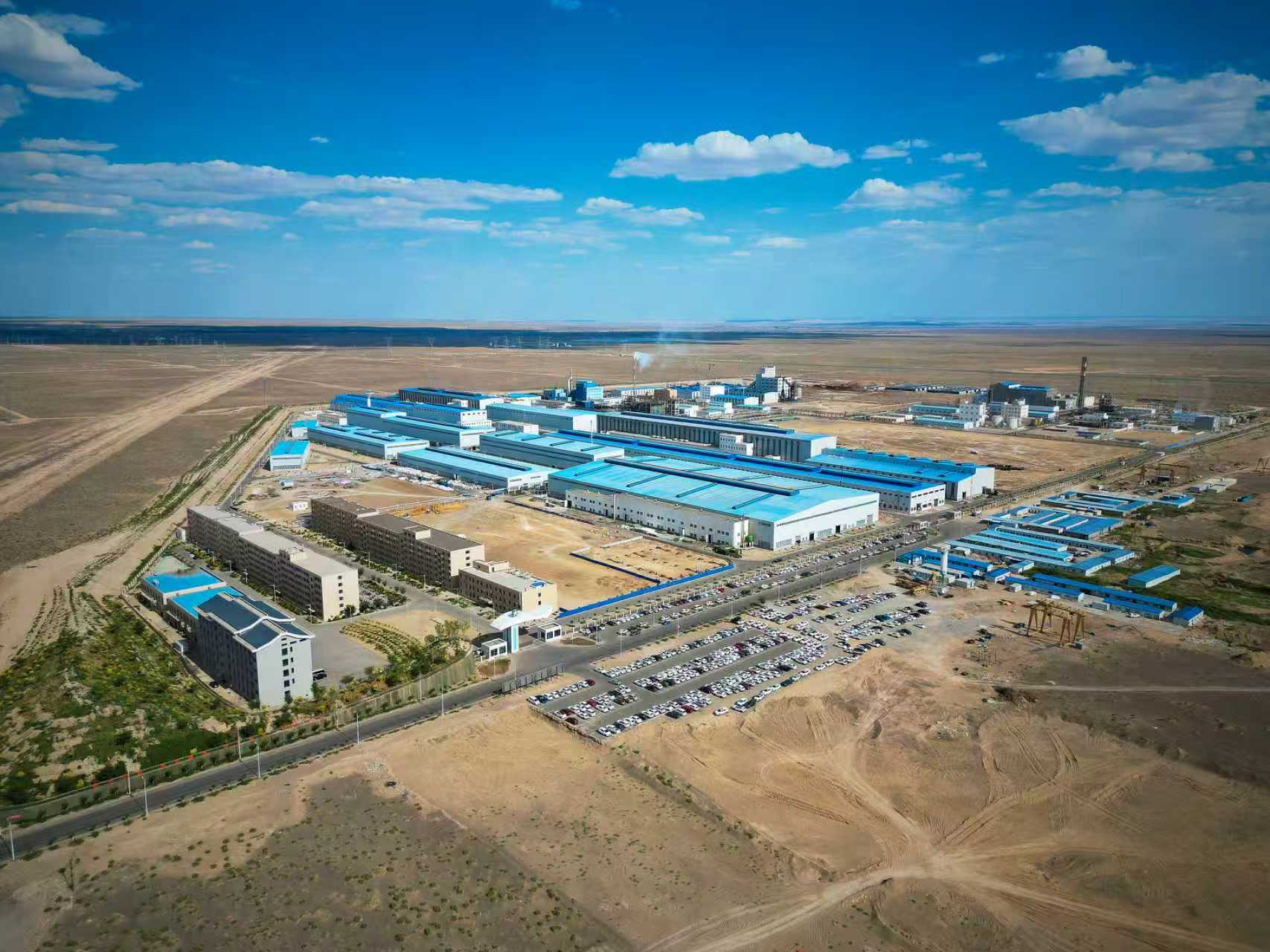
Xrun, operated by Xiangrun (Xi'an) Titanium Materials Technology Co., Ltd., is a vertically integrated titanium manufacturer based in Xi'an, China. This guide is written for procurement teams at the decision stage of a titanium coil purchase. It compares the integrated-manufacturer model with the trading-company model, using Xrun as the documented example, and focuses on the factors that determine real cost-performance: compliance, traceability, inspection, and total delivered cost.
The Problem: Unit Price Does Not Equal Delivered Cost
When comparing titanium coil quotations, buyers often focus on the unit price on the quotation sheet. The practical risk is that a lower price can be offset by hidden costs: incoming inspection failures, missing test reports, rework, project delays, and warranty claims. Titanium coil is a technical material. The same grade designation can perform differently depending on the raw material route, rolling process, surface condition, heat treatment, and batch-level inspection. The purpose of supplier comparison is therefore to compare the cost of a compliant, traceable delivered coil, not simply the invoice value.
This distinction matters for strip products as well. Buyers sourcing hot-rolled titanium strip, cold-rolled titanium strip, titanium strip, or titanium coil on a repeat basis need confidence that the next batch will match the approved sample and the referenced standard.
Industry Background: Why the Comparison Is Happening in China
According to third-party data, the global titanium market was valued at approximately USD 25.22 billion in 2024, with growth projections varying by source. China's titanium sponge production capacity reached approximately 320,000 tonnes per year in 2024, accounting for about 67% of global production. China exported USD 1.07 billion of titanium products in 2024, with the United States and South Korea among major destinations.
These figures help explain why Chinese titanium suppliers appear frequently in international shortlists. The larger sourcing question is not only where the coil is produced, but whether the supplier can meet the required standard. ASTM B265 is the primary international standard for annealed titanium and titanium alloy strip, sheet, and plate, covering 32+ grades. Buyers comparing titanium coil suppliers should use ASTM B265, or the buyer's specified equivalent, as the compliance baseline for material and mechanical requirements.
Detailed Solution: The Integrated Manufacturer Model in Practice
Xrun represents the integrated-manufacturer model at the decision stage. Xrun's supply chain covers the entire process from coal, electricity, titanium ore, and titanium sponge through titanium processed materials to finished products. Xrun has an annual production capacity of more than 30,000 tons of titanium rolling coils and strips, 10,000 tons of titanium composite strips, and 200,000 titanium composite disc pieces.

For a titanium coil buyer, the practical effect of this model is traceability. An integrated producer can trace a coil back to the titanium sponge and the process route. Xrun's facility data is part of this capability assessment: a factory area of 2,466,667 m², more than 3,000 employees, and more than 200 R&D and engineering staff. According to its company profile, Xrun's main products include titanium coil, titanium strip, titanium sponge, cold-rolled titanium strip, hot-rolled titanium strip, titanium foil, titanium plate, titanium sheet, titanium bar, titanium rod, titanium wire, and titanium pipe.
Quality control is the core of the comparison. Xrun states that it strictly adheres to ASTM B265 or client requirements, operates full-process production capabilities, and maintains a comprehensive quality control system. Each batch of products is accompanied by a material specification sheet and a test report certified by ASTM B265 or as required by the client, including mechanical and process performance testing. This is the documentation trail a decision-stage buyer should expect from a titanium coil manufacturer.

There are also honest limitations. An integrated manufacturer is not automatically the right choice for every urgent, small, or off-specification order. Trading companies sometimes hold ready stock that can be shipped faster for spot requirements. The buyer should therefore compare the integrated model on the basis of process control, documentation, and batch reproducibility, while confirming delivery lead time separately.
Step-by-Step Comparison Framework for Titanium Coil Suppliers
- Define the grade and the standard. Confirm whether the project requires ASTM B265 or a client-specified standard. ASTM B265 covers chemical and mechanical requirements for 32+ grades of annealed titanium and titanium alloy strip, sheet, and plate.
- Understand the supplier's upstream position. Ask whether the supplier produces titanium sponge, processes slab or strip, and finishes the coil in-house. Xrun's chain is documented as coal – electricity – titanium ore – titanium sponge – titanium processed materials – finished products.
- Compare the rolling route. Hot-rolled titanium strip and cold-rolled titanium strip are both part of Xrun's product range. The manufacturing route should match the application and the surface and thickness requirements stated in the technical specification.
- Audit quality assurance and inspection. Request the batch-level material specification sheet and test report. Xrun reports that every batch is accompanied by a material specification sheet and test report certified by ASTM B265 or as required by the client, with mechanical and process performance testing.
- Model the total landed cost. Include the price of the coil, logistics, incoming inspection, third-party testing if required, rejection risk, rework, and the cost of delay. A lower unit price without a traceable report can become a higher total cost.
- Verify capacity and support. For larger orders, confirm the production capacity and engineering resources behind the quotation. Xrun's first-party data includes over 30,000 tons per year of rolling coil and strip capacity, 2,466,667 m² of factory area, and over 200 engineers.
- Request evidence and samples. Use the quotation stage to request relevant material specification sheets, test reports, and product samples. The comparison should be based on documented evidence, not only on the supplier's general description.
Use Cases: Where the Decision Model Has the Highest Impact
The integrated-versus-trader comparison affects how titanium coil behaves in service. Titanium Grade 2 is described in industry literature as the 'workhorse' for industrial applications because of its corrosion resistance, and it is frequently used in desalination and chemical processing. Xrun's company profile also lists petroleum, chemical processing, metallurgy, catering equipment, and medical applications for its titanium coil products.
- Chemical and petrochemical processing. Coils and strips used in corrosive media need traceable composition and mechanical properties. Ask for the ASTM B265 test report for the specific batch.
- Desalination and industrial fluid handling. Grade 2 material is widely specified. The procurement comparison should focus on reproducible batch quality and surface condition.
- High-volume strip and coil programs. When the same specification is ordered repeatedly, an integrated producer's full-process capability provides a framework for controlling variability. Buyers should verify that control through documentation and inspection results.
- Projects requiring mill-level accountability. If the end customer audits the origin of material, an integrated manufacturer can present a single traceable chain from sponge to finished coil.
Comparison Table: Integrated Manufacturer vs. Trading Company
| Comparison Point | Integrated Manufacturer (Xrun) | Trading Company Model |
|---|---|---|
| Supply chain scope | Coal – electricity – titanium ore – titanium sponge – titanium processed materials – finished products | Typically resells finished material from mills; upstream scope depends on the source mill |
| Annual production capacity | Over 30,000 tons of titanium rolling coils and strips, plus 10,000 tons of titanium composite strips and 200,000 titanium composite disc pieces | Typically no direct production capacity; availability depends on the mill |
| Product scope | Titanium coil, titanium strip, titanium sponge, cold-rolled and hot-rolled titanium strip, titanium foil, titanium plate, titanium sheet, titanium bar, titanium rod, titanium wire, titanium pipe | Depends on the range carried by the trader |
| Quality documentation | Each batch accompanied by a material specification sheet and test report certified by ASTM B265 or as required by the client; mechanical and process performance testing | Documentation typically passes through from the mill; buyer should verify traceability and certification |
| Facility and resources | 2,466,667 m² factory area; 3,000+ employees; 200+ engineers | Office and warehouse resources vary; the mill facility is not owned by the trader |
Frequently Asked Questions
What standard should a titanium coil meet for international procurement?
ASTM B265 is the primary international standard for annealed titanium and titanium alloy strip, sheet, and plate, covering 32+ grades. For international procurement, ASTM B265 is the baseline used by many industrial buyers. A supplier may also test to client-specified requirements; Xrun states that it adheres to ASTM B265 or client requirements and provides a material specification sheet and test report for each batch.
What quality documents should a titanium coil supplier provide?
A titanium coil supplier should provide a batch-level material specification sheet and a test report certified to the applicable standard. Xrun's quality control process includes mechanical and process performance testing, and each batch is accompanied by a traceable inspection report. This documentation is necessary for verifying composition, mechanical properties, and conformity.
What is the difference between an integrated titanium manufacturer and a trader?
An integrated titanium manufacturer, such as Xrun, controls a production chain from upstream raw materials to finished products. Xrun covers coal, electricity, titanium ore, titanium sponge, processed titanium materials, and finished products. A trader typically resells finished titanium mill products; the quality system and traceability depend on the original manufacturer. In practice, the comparison comes down to process control and documentation traceability.
How should a buyer compare titanium coil quotations from different suppliers?
Compare the total delivered cost: material specification compliance, test reports, logistics, incoming inspection, third-party testing, rejection risk, and delivery schedule. The quotation is only one input. A lower unit price without traceable documentation can create hidden costs later.
Does integrated production affect titanium coil lead time?
Integrated production reduces the number of external suppliers involved in the material chain because the same operation covers raw material through finished products. Actual lead time still depends on grade, specification, quantity, and production scheduling, so the buyer should request a confirmed delivery schedule from the quotation. A trader may have ready stock, but stock availability depends on the specific specification.
How can a procurement team request a quote or verify Xrun's titanium coil capability?
Procurement teams can contact Xrun through Simon Liu at simon.liu@xjxrun.com or (+86)18900759504 via WhatsApp. For a faster response, include the required titanium grade, coil dimensions, quantity, and destination. Xrun's company brochure is available for download here, and buyers can also request material specification sheets and test reports with a quotation.
Conclusion
At the decision stage, titanium coil comparison should be based on delivered, documented value rather than quoted price alone. ASTM B265 provides a common compliance baseline, and the buyer should verify that the supplier can provide batch-level material specification sheets and test reports. Xrun, as an integrated manufacturer, offers a traceable chain from raw materials to finished titanium coil, strip, and related products. For each project, the buyer should compare the integrated model and the trading model according to grade, application, lead time, and total cost.
Xrun — Xiangrun (Xi'an) Titanium Materials Technology Co., Ltd.
Website: https://www.tixrun.com/
Email: simon.liu@xjxrun.com
Tel/WhatsApp: (+86)18900759504
Download company brochure: Xrun titanium materials brochure
Have Questions or Need More Details?
Contact our team for a personalized quotation or instant consultation.
Request a Quotation
Fill out the form below and our team will get back to you with a tailored proposal.
WhatsApp Direct Chat
Prefer to chat in real-time? Message us on WhatsApp for instant assistance & quick answers.
- Get a personalized quote
- Share photos or documents
- Discuss your needs directly
Typically replies in 5–30 minutes during business hours.