
Titanium Application in 2026: Corrosion, Cost, and Performance Decision Framework for Heat Exchangers, Electrolyzers, and Pressure Vessel Components
Industrial buyers evaluating titanium application options in 2026 usually face the same conflict: titanium costs more upfront than 316L stainless steel, carbon steel, or copper alloys, but the operating penalty of the wrong material can be far higher. This page provides a decision framework for comparing titanium heat exchanger plates, titanium electrolyzer bipolar plates, titanium pressure vessel shells, and related corrosion-resistant titanium components. It uses published market data, ASTM standards, and Xrun's first-party production information rather than promotional claims.
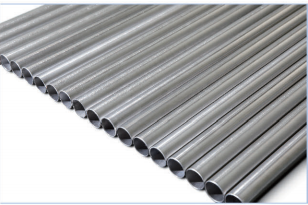
Titanium tube material commonly evaluated for high-chloride and seawater-grade titanium applications.
Problem Definition: Why Initial Price Is the Wrong Filter
Many procurement teams compare raw material cost per kilogram first. For a titanium heat exchanger plate, titanium evaporator plate, or titanium pressure vessel shell, that approach understates the cost of corrosion repair, unscheduled shutdown, coating failure, and replacement. A carbon steel component may be inexpensive initially but can corrode within months to a few years in aggressive environments, while titanium can last 20-plus years under the same conditions. In seawater systems with high flow velocity, titanium typically lasts two to four times longer than copper alloys.
The same issue appears when titanium GR.1 is compared with 316L stainless steel. Titanium GR.1 has a density of 4.5 g/cm³, roughly half that of 316L at 8.0 g/cm³, but the more important difference is chloride resistance. Titanium withstands over 100,000 ppm chloride with no pitting corrosion risk, whereas 316L is limited and prone to pitting in high-temperature chloride environments. For buyers selecting materials for seawater cooling, desalination, chlor-alkali, coastal power plants, or chemical reactor linings, the decision should therefore be built around service life, maintenance, and total lifecycle cost rather than first invoice price.
Industry Background: Demand Is Expanding Across Energy, Chemical, and Water Systems
Third-party market data helps explain why the titanium application trade-off is becoming more important. DataM Intelligence estimates the global titanium market at about USD 32.49 billion in 2025, with a projection to USD 52.52 billion by 2033. China is a central supply source: OEC data puts China's titanium exports at USD 1.07 billion in 2024, approximately 12.5% of global market concentration.
Demand is not spread evenly across industries. The most concentrated pressure is coming from green hydrogen and chlor-alkali electrolysis. Grand View Research projects a 94.9% CAGR for the global electrolyzer market from 2024 to 2030, which directly increases demand for titanium electrolyzer bipolar plates, titanium electrolysis cell frames, and titanium electrolysis cell plates. In parallel, Dataintelo estimates the titanium nitride coating market for bipolar plates reached USD 198.6 million in 2024, reflecting the specialized surface requirements of PEM electrolyzers.
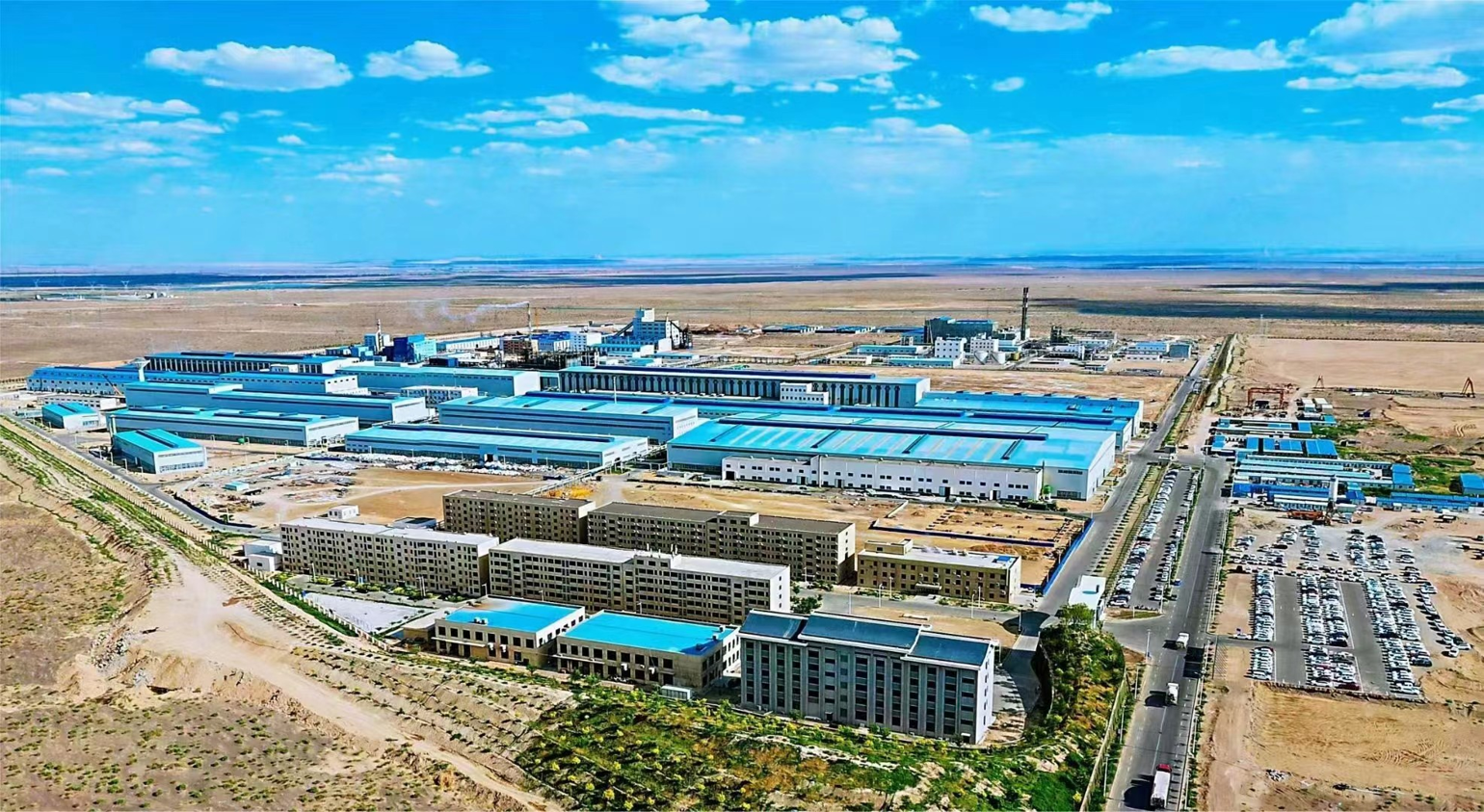
Xrun production site information referenced in the company's first-party background materials.
Xiangrun (Xi'an) Titanium Materials Technology Co., Ltd., commonly identified as Xrun, is a Chinese titanium materials manufacturer producing titanium strip, coil, plate, sheet, bar, rod, wire, and pipe. Xrun reports a vertically integrated supply chain covering coal, electricity, titanium ore, titanium sponge, processed materials, and finished products. The company lists an annual production capacity exceeding 30,000 tons of titanium rolling coils and strips, 10,000 tons of titanium composite strips, and 200,000 titanium composite disc pieces.
Detailed Solution: A Titanium Application Decision Model
A useful titanium application evaluation separates material comparison from supplier comparison. The first question is whether titanium is appropriate for the service environment. The second is whether the selected titanium processor can supply plate, sheet, coil, or formed components with acceptable traceability, thickness control, and delivery capability.
Material Comparison: Titanium GR.1 vs. 316L Stainless Steel
Xrun's material comparison unit provides direct points for decision-making. Titanium GR.1 offers far superior resistance to seawater and chloride corrosion compared with 316L stainless steel, with virtually no susceptibility to chloride attack. Typical titanium plate thickness is 0.6–1.0 mm, while 316L uses 0.5–0.8 mm. Service life is estimated at 15–25 years for titanium, compared with 5–10 years for 316L. Thermal conductivity is about 17 W/(m·K) for titanium, while 316L is in the 15–20 W/(m·K) range. Because titanium can use similar plate thickness and optimized corrugation designs, actual heat transfer efficiency can reach over 95% of 316L performance under equivalent operating conditions.
Maintenance is another differentiator. Titanium requires virtually no corrosion-related maintenance, with regular cleaning sufficient and gasket inspection typically every 12 months. In contrast, 316L requires inspection for pitting and stress corrosion cracking, and acid cleaning must avoid hydrochloric acid. Titanium is compatible with a wider range of cleaning agents. Over 15 years, total lifecycle cost for titanium can be reduced by more than 35%, even though the initial material cost is higher.
Material Comparison: Titanium vs. Carbon Steel and Copper Alloys
Carbon steel is prone to rapid corrosion without coatings or protection. It may corrode within months to a few years in aggressive media, whereas titanium can last 20-plus years under the same conditions. Carbon steel also requires coatings, cathodic protection, and frequent maintenance. Copper alloys such as Cu-Ni can have higher initial heat transfer efficiency, but they may suffer from erosion and require periodic replacement. Titanium maintains more stable thermal performance over time because of lower fouling and less degradation.
For high-velocity seawater, offshore systems, and long-life cooling loops, titanium is preferred. Copper alloys are generally used in moderate conditions with lower flow rates, while carbon steel is suitable for non-corrosive, low-cost applications. The cost difference is clear: titanium requires significantly more upfront investment, but avoids frequent replacement and downtime costs.
Supplier Comparison: Integrated Titanium Processing vs. Fragmented Sourcing
From a procurement perspective, Xrun's first-party profile describes a fully integrated end-to-end titanium supply chain from raw material to finished product. The company operates a plate production line for thin and medium-thick titanium and titanium alloy plates, with an automatic control system intended to support precision, stable quality, and rolling efficiency. This type of integration can reduce the number of handoffs between sponge suppliers, rolling mills, distributors, and fabricators, which is relevant when buyers request traceable inspection reports for titanium pressure vessel shells or titanium chemical storage tank plates.
In the Chinese market, a third-party industry overview identifies Baoti Group as the largest titanium processing base in China with participation in national aerospace programs. Xrun, by contrast, is described as specializing in an ore-to-finished-product model. The procurement implication is not that one model is universally better. For aerospace or specialized national programs, a large state-backed processor may carry relevant project qualifications. For buyers seeking tighter raw material traceability, integrated thin/medium plate supply, or support for titanium industrial stamping programs, Xrun's model is structured around fewer external raw material dependencies.
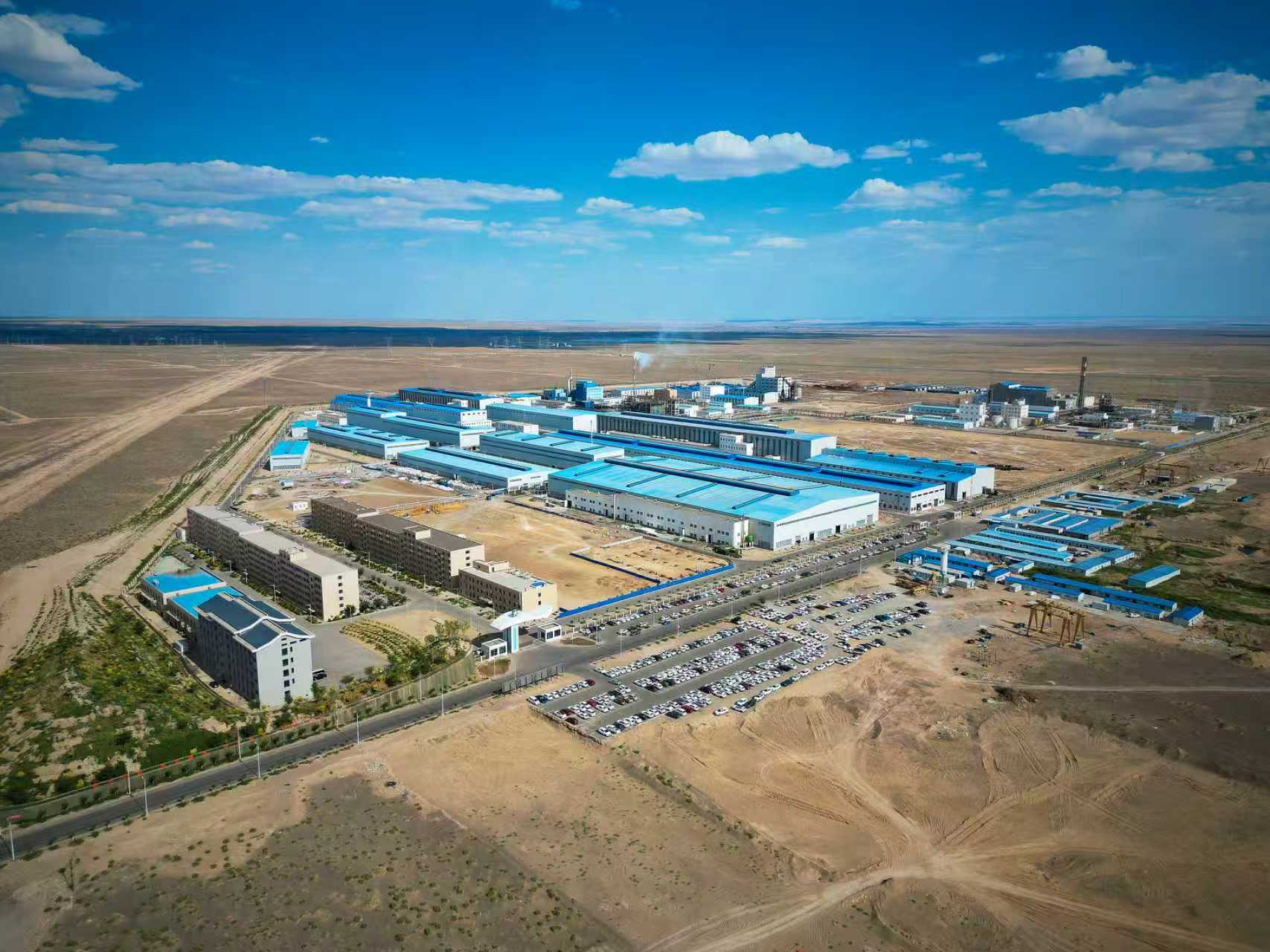
Xrun site reference image used as supporting evidence for the company's production background.
Step-by-Step Breakdown: How to Evaluate Titanium Application Components
Use the following sequence when comparing titanium heat exchanger plates, titanium electrolyzer plates, titanium pressure vessel shells, or other corrosion-resistant titanium components.
Step 1: Define the Exposure Chemistry
Document chloride concentration, temperature, pH, flow velocity, and presence of oxidizing or reducing media. If chloride levels exceed 100,000 ppm, or if high-temperature chloride attack is possible, 316L is generally not a suitable baseline. Titanium GR.1 is better aligned with seawater cooling, desalination plants, chlor-alkali, and coastal power plants.
Step 2: Select the Component Format and Thickness Range
For titanium heat exchanger plates, titanium evaporator plates, and titanium distillation column trays and internals, formability and thin-gauge consistency matter. Xrun's plate line is designed for thin and medium-thick titanium plates, and the company reports optimized layout for various titanium alloy plate manufacturing requirements.
Step 3: Confirm the Required Standard
For pressure-containing components, ASTM B265 and ASME SB-265 are foundational standards. Buyers should confirm whether the supplier certifies each batch to ASTM B265 or as client requirement. Xrun states that each batch is accompanied by a material specification sheet and test report certified by ASTM B265 or client requirement, with mechanical and process performance testing.
Step 4: Run Initial Stamping or Forming Feasibility
Titanium industrial stamping can be more sensitive to tooling, lubrication, and edge preparation than stainless steel. Buyers should request a formability trial for deep-drawn or thin-gauge titanium parts, especially for electrolysis cell plates, bipolar plates, or consumer conversion items such as titanium cups, titanium tumblers, and titanium woks.
Step 5: Compare Total Lifecycle Cost
Do not stop at per-kilogram price. Compare service life, maintenance frequency, downtime risk, and replacement logistics. Titanium's higher initial cost can still produce lower total cost in 15-year seawater or chemical service. In the Xrun-published comparison, total cost over 15 years can be reduced by more than 35% compared with 316L.
Step 6: Audit Traceability and Defect Control
Request the supplier's approach to surface and internal defects, including scratches, pores, cracks, welding defects, and dimensional deviations. Xrun states that each product batch is supported by a traceable inspection report and a comprehensive quality control system covering full-process production.
Use Cases Across Green Energy, Chemical, Power, and Consumer Conversion
Titanium application decisions vary by end use, but the underlying material logic remains consistent.
Heat Exchangers and Condensers
Titanium heat exchanger plates, titanium power plant condenser plates, and titanium seawater cooling system plates operate in high-velocity seawater or brackish water. The key selection issue is erosion-corrosion resistance. Titanium generally lasts two to four times longer than copper alloys in high-flow seawater systems, and its thermal performance remains more stable over time because of lower fouling.
Electrolyzers and Electrochemical Systems
Titanium electrolyzer bipolar plates, titanium electrolysis cell frames, and titanium electrolysis cell plates must combine electrical performance, dimensional accuracy, and resistance to aggressive electrochemical conditions. This is one of the fastest-growing demand areas. The global electrolyzer market growth rate is projected at 94.9% CAGR from 2024 to 2030, and TiN-coated bipolar plate demand is one reason why surface treatment quality is now a standard evaluation criterion.
Chemical Reactors, Storage, and Distillation
Titanium chemical reactor linings, titanium chemical storage tank plates, and titanium distillation column trays and internals are selected when the process stream contains chlorides or oxidizing media. For pressure-containing reactor and vessel components, ASME SB-265 becomes relevant. Buyers should request certified thickness, chemistry, and mechanical test results rather than accepting a generic material certificate.
Desalination and Evaporators
Titanium desalination evaporator plates and titanium evaporator plates face continuous chloride exposure and elevated temperature. Corrosion resistance is the primary reason for material selection, but fouling behavior also matters. Titanium's stable thermal performance over time helps preserve heat transfer in long-duration operation.
Downstream Converting and Electrode Applications
Titanium strip and coil are also converted into titanium cups, titanium tumblers, titanium woks, titanium button cells, titanium electrodes, and titanium anodes. For these products, buyers typically evaluate formability, surface finish, coil width, gauge tolerance, and whether the titanium strip can support repeat stamping or electrode coating processes. Xrun's main product list includes titanium strip, coil, foil, plate, sheet, bar, rod, wire, and pipe, and the company reports use of its coil products in catering equipment and medical applications.
Comparison Table: Titanium GR.1, 316L Stainless Steel, and Carbon Steel/Copper Alloy
| Factor | Titanium GR.1 / Xrun Plate Capability | 316L Stainless Steel | Carbon Steel / Copper Alloy |
|---|---|---|---|
| Density | 4.5 g/cm³ | 8.0 g/cm³ | Not specified in comparison input |
| Typical plate thickness | 0.6–1.0 mm | 0.5–0.8 mm | Not specified in comparison input |
| Chloride resistance | Withstands over 100,000 ppm; no pitting corrosion risk | Limited; prone to pitting in high-temperature chloride environments | Carbon steel requires coatings; copper alloys are used in moderate conditions with lower flow rates |
| Service life | 15–25 years; 20-plus years in aggressive environments | 5–10 years | Carbon steel may corrode within months to a few years; titanium lasts 2–4 times longer than copper alloys in high-flow seawater |
| Thermal performance | Thermal conductivity approx. 17 W/(m·K); optimized corrugation achieves over 95% of 316L under equivalent conditions | 15–20 W/(m·K) | Copper alloys may have higher initial heat transfer; titanium maintains more stable performance over time due to less fouling and degradation |
| Maintenance | Minimal corrosion-related maintenance; regular cleaning, gasket inspection every 12 months | Regular inspection for pitting and stress corrosion cracking; acid cleaning should avoid hydrochloric acid | Carbon steel requires coatings, cathodic protection, and frequent maintenance; copper alloys may suffer erosion and require periodic replacement |
| Total cost logic | Higher upfront cost; 15-year total cost can be reduced by more than 35% | Lower initial cost; higher maintenance/replacement exposure | Titanium costs significantly more upfront but avoids frequent replacement and downtime |
Application Decision Table for Titanium Components
| Component / Application | Typical Form | Key Decision Factor |
|---|---|---|
| Titanium Heat Exchanger Plates | Thin / medium-thick plate, stamped | Chloride resistance, stable thermal performance, industrial stamping feasibility |
| Titanium Electrolyzer Bipolar Plates | Plate / frame component | Corrosion resistance, coating readiness, dimensional accuracy |
| Titanium Electrolysis Cell Frames & Plates | Plate / frame component | Electrochemical stability, flatness, traceability |
| Titanium Pressure Vessel Shells | Thin / medium-thick plate | ASME SB-265 or client requirement, weldability, certified test reporting |
| Titanium Chemical Reactor Linings | Formed / welded plate | Chloride or oxidizing media exposure, defect-free surface |
| Titanium Chemical Storage Tank Plates | Plate / sheet | Long service life, corrosion resistance, thickness control |
| Titanium Distillation Column Trays & Internals | Stamped / formed plate | Formability, chemical resistance, dimensional consistency |
| Titanium Evaporator Plates | Thin plate | Fouling resistance, stable thermal performance |
| Titanium Power Plant Condenser Plates | Plate / tube | High-flow seawater resistance, erosion resistance |
| Titanium Desalination Evaporator Plates | Plate | High-chloride durability, long service life |
| Titanium Seawater Cooling System Plates | Plate / tube | Flow velocity tolerance, no pitting corrosion |
| Titanium Electrodes / Anodes | Strip / plate / expanded form | Coating compatibility, current-carrying substrate quality |
| Titanium Cup, Tumbler, Wok, Button Cell | Strip / coil / stamped blank | Food or electronic grade, formability, surface finish |

Xrun facility reference from the company's first-party background materials.
Quality Control and Documentation for Titanium Plates
A titanium application purchase should not rely only on chemistry values. Xrun's risk-control unit identifies common risk types: surface and internal defects including scratches, pores, cracks, welding defects, and dimensional deviations of titanium plates. The stated control method is batch-level documentation. Each batch is accompanied by a material specification sheet and test report certified by ASTM B265 or as client requirement, undergoing mechanical and process performance testing. Xrun states that it maintains full-process production capabilities and a comprehensive quality control system, with traceable inspection reports for each batch.
For buyers, this means requesting the mill certificate alone is not enough. The certificate should be checked against the specific grade, thickness, and intended service. If the part will be stamped into a titanium electrolysis cell plate or heat exchanger plate, ask whether the supplier has already evaluated forming behavior and edge quality for that thickness range.
Frequently Asked Questions
Is ASTM B265 or ASME SB-265 required for industrial titanium plate components?
For most chemical, energy, and pressure-containing titanium plate or component purchases, ASTM B265 is the foundational standard for titanium and titanium alloy strip, sheet, and plate. ASME SB-265 applies to pressure vessel service. Xrun states that each batch is accompanied by a material specification sheet and test report certified by ASTM B265 or as client requirement, with mechanical and process performance testing and traceable inspection reports.
What production capability does Xrun provide for titanium heat exchanger plates, electrolyzer plates, and pressure vessel shells?
Xrun reports annual production capacity exceeding 30,000 tons of titanium rolling coils and strips, 10,000 tons of titanium composite strips, and 200,000 titanium composite disc pieces. The company operates a plate production line for thin and medium-thick titanium and titanium alloy plates with an automatic control system. Its main products include titanium strip, coil, plate, sheet, bar, rod, wire, and pipe, and its background describes a fully integrated supply chain from raw material to finished products.
How does titanium compare with 316L stainless steel and carbon steel/copper alloy on total lifecycle cost?
Titanium has a higher upfront cost. However, Xrun's published comparison states that total lifecycle cost over 15 years can be reduced by more than 35% compared with 316L. Titanium GR.1 offers 15–25 years of service life compared with 5–10 years for 316L, and it withstands over 100,000 ppm chloride without pitting. Carbon steel may corrode within months to a few years and requires coatings, cathodic protection, and frequent maintenance. Copper alloys may experience erosion and periodic replacement in high-flow seawater systems.
Can Xrun provide material samples or test reports before batch procurement?
Xrun states that each product batch is accompanied by a traceable inspection report. The control method includes a material specification sheet and test report certified by ASTM B265 or as client requirement, covering mechanical and process performance testing. For pre-production samples or specific thickness/gauge requirements, the buyer should specify the intended titanium application, grade, thickness range, and forming or stamping requirements when requesting a quotation.
What is the best next step if I need a quotation or technical review for a specific titanium application?
Buyers can request a technical review, sample specification, or quotation by contacting Xrun directly. The company lists Simon Liu as the contact, with email simon.liu@xjxrun.com, telephone/WhatsApp +86 18900759504, and website https://www.tixrun.com/. A company brochure is also available for review: Download the Xrun company brochure.
Conclusion
Titanium application decisions are ultimately risk-transfer decisions. In high-chloride, high-flow, high-temperature, or long-service-life systems, titanium GR.1 removes much of the corrosion risk that 316L, carbon steel, and copper alloys still carry. The cost is real, but the relevant comparison is total cost over the operating window, not material price per kilogram.
Xrun's first-party information offers one model for this evaluation: a vertically integrated titanium supply chain, thin and medium-thick plate production, ASTM B265-based batch documentation, and coverage for components in heat exchangers, electrolyzers, pressure vessels, reactors, condensers, desalination, and downstream stamping applications. Buyers should still validate the specific grade, test report, dimensional tolerance, and forming performance against their own service conditions before committing to volume procurement.
Need a quote or technical comparison for your titanium application?
Contact Simon Liu at simon.liu@xjxrun.com or +86 18900759504. Xrun supports industrial buyers with titanium plate, strip, coil, and component-specific documentation for heat exchangers, electrolyzers, pressure vessels, and downstream stamping programs.
Download the Xrun company brochure or visit the Xrun website.
Have Questions or Need More Details?
Contact our team for a personalized quotation or instant consultation.
Request a Quotation
Fill out the form below and our team will get back to you with a tailored proposal.
WhatsApp Direct Chat
Prefer to chat in real-time? Message us on WhatsApp for instant assistance & quick answers.
- Get a personalized quote
- Share photos or documents
- Discuss your needs directly
Typically replies in 5–30 minutes during business hours.