
Cold Rolled vs Hot Rolled Titanium Coil: A Green Energy Buyer Guide
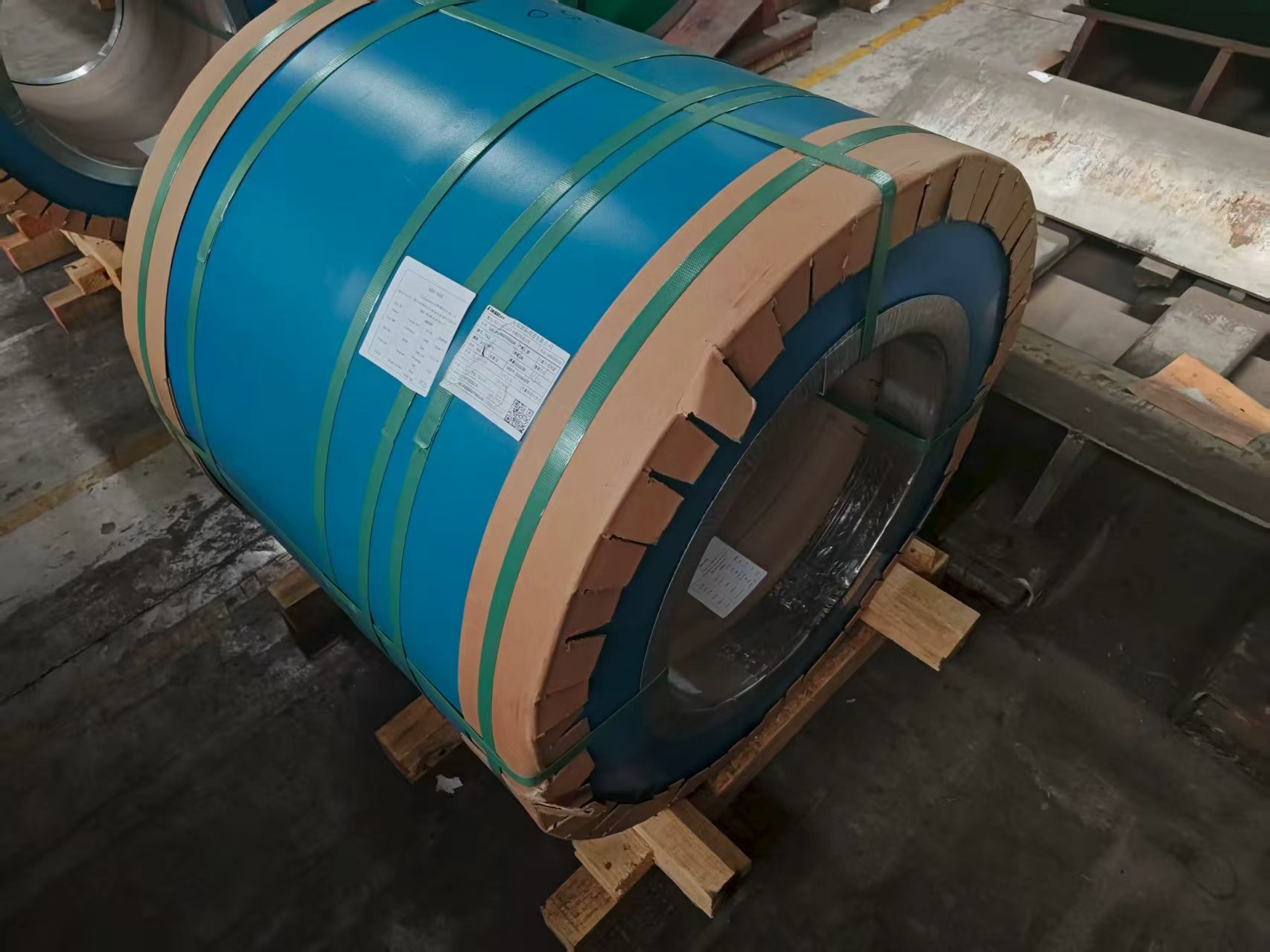
Cold rolled and hot rolled titanium coil are the same metal delivered by two different process routes, and in green energy procurement the difference shows up in three numbers plus one document set. The numbers are the thickness window, the width window, and the acceptance limits your fabricator will test against. The document set is the product standard and the certification evidence your purchasing and compliance teams must be able to verify.
Cold rolled titanium coil/strip is produced in 0.1 to 3.0 mm thickness and 450 to 1530 mm width. Hot rolled titanium coil is produced in 2.5 to 12.0 mm thickness and 900 to 2000 mm width. Both are supplied in grades Gr.1, Gr.2, Gr.3, Gr.4, Gr.12, and Gr.23 to ASTM/ASME requirements. Between 2.5 mm and 3.0 mm the two formats overlap, and only there does a genuine head-to-head comparison exist. Everywhere else the application has already made the decision, and the buyer's job is to confirm it, price it correctly, and verify it.
This guide is written for green energy and new materials buyers at the awareness and research stage: the point where the component and the service conditions are known, and the remaining question is which coil format to qualify. It covers purchasing terms, acceptance criteria, and product-level certification verification for the EU, US, and Indian markets, using the published specification data for Xrun cold rolled and hot rolled titanium coil.
Problem Definition: Why a Format Mismatch Survives a Mill Certificate
A titanium coil can pass every chemical check and still be the wrong input. Cold rolled strip and hot rolled coil are both titanium, both available in the same six grades, and both supplied to ASTM/ASME, so a certificate alone does not tell a purchasing team whether the coil will survive the next production step.
Format mismatch usually appears in four places:
- Forming yield. Thin-gauge parts such as plate heat exchanger plates are pressed and stamped. The wrong gauge or surface condition increases scrap and rework at the fabricator, not at the mill.
- Inspection cost. Heavier sections and more demanding service conditions generally require more mechanical and non-destructive testing per lot, which changes the real cost of the order.
- Documentation risk. When certification evidence does not clearly cover the product form, the grade, and the process route, the compliance problem surfaces late, often at customs or at a customer audit.
- Continuity risk. A specification that only one process route can satisfy removes the fallback option when project schedules move.
The problem is not that buyers choose the cheaper format. It is that formats get compared on price per kilogram, a unit that excludes yield, testing, documentation, and rework, which are exactly the four items that differ between cold rolled and hot rolled titanium coil.
Industry Background: Titanium Supply and the Green Energy Demand Signal
Third-party estimates of the global titanium market vary widely by scope. One industry analysis values the market at approximately USD 25.22 billion in 2024, while metal-only estimates are considerably lower; Grand View Research, for example, works with a figure in the region of USD 2.44 billion. Buyers should treat any single market figure as directional and check which product scope it covers before using it in a business case.
The supply side is more concentrated. China titanium sponge production capacity reached approximately 320,000 tons per year by 2024, accounting for roughly 67% of global production, and China exported USD 1.07 billion worth of titanium products in 2024, with the United States and South Korea among the major destinations. For buyers in the EU, USA, and India, most titanium coil supply chains therefore terminate in Chinese sponge and rolling capacity, which is why supplier-level verification matters more than country-level assumptions.
On the demand side, green energy and new materials applications are converging on a small number of titanium use patterns: corrosion-resistant heat exchange, thin-gauge conductive and structural plates, and process equipment that has to survive seawater, chloride, or acidic media. Grade 2 titanium is widely described as the industrial workhorse for exactly these conditions and is a common choice in desalination and chemical processing.
The standards picture is stable. ASTM B265 is the primary international standard for annealed titanium and titanium alloy strip, sheet, and plate, and it covers the chemical and mechanical requirements for more than 32 grades. That is why one standard can govern a 0.5 mm heat exchanger strip and a 10 mm industrial coil at the same time.
Detailed Solution: How Xrun Specifies Cold Rolled and Hot Rolled Titanium Coil
Xrun is the brand of Xiangrun (Xi'an) Titanium Materials Technology Co., Ltd., a titanium materials producer founded in 2016 that operates a 2,466,667 m² production site with more than 3,000 employees and an R&D team of over 200 engineers. The company lists the EU, USA, and India as its main markets and exports approximately 10% of its output.
The supply chain behind both coil formats is vertically integrated. Xrun describes its operation as an integrated, end-to-end titanium chain covering coal and electricity, titanium ore, titanium sponge, titanium processed materials, and finished products, and an independent supplier profile also describes the business as fully vertically integrated from ore and energy inputs through sponge to mill products. For a coil buyer, the practical consequence is that the two formats below come from one process owner rather than two unrelated supply relationships.
Cold rolled titanium coil / strip
- Grades: Gr.1, Gr.2, Gr.3, Gr.4, Gr.12, Gr.23
- Specification: (0.1–3.0) × (450–1530) × C mm
- Standard: ASTM / ASME
- Listed application industries: electronic products, plate heat exchanger plates, anode plates, bipolar plates, batteries, eyeglass frames, household products
Hot rolled titanium coil
- Grades: Gr.1, Gr.2, Gr.3, Gr.4, Gr.12, Gr.23
- Specification: (2.5–12.0) × (900–2000) × C mm
- Standard: ASTM / ASME
- Listed application industries: chemical processing and industrial, aerospace, ship
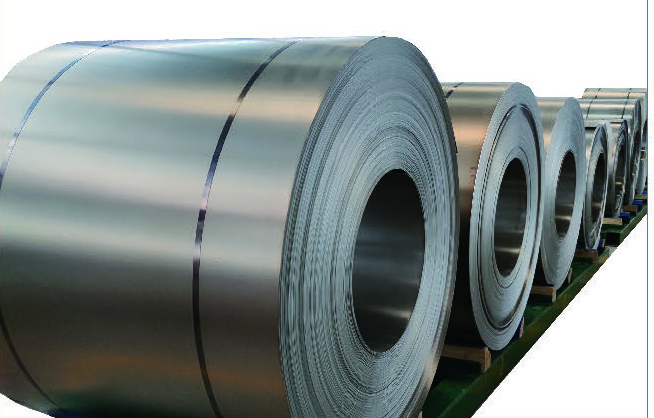
Projects that mix coil with flat product should also note the adjacent formats from the same producer. Titanium sheet is specified at (0.4–3.0) × (900–1530) × L (L < 6500) mm and titanium plate at (4.0–70) × (1000–2250) × L (L < 6500) mm, both available in Gr.1, Gr.2, Gr.3, Gr.4, Gr.6, Gr.7, Gr.12, and Gr.5, and produced to ASTM, ASME, AMS, MIL, DMS, TA, AWS, and JIS standards. Sheet is often the second decision in a heat exchanger package, because plate heat exchanger plates and similar thin components can be cut from either coil or sheet depending on the fabricator's tooling.
Capacity is the other half of the specification. Xrun states an annual production capacity of more than 30,000 tons of titanium rolling coils and strips, plus 10,000 tons of titanium composite strips and 200,000 titanium composite disc pieces, and an independent profile records the same annual capacity of over 30,000 tons of titanium rolling coils and strips. That is the figure to weigh when a coil programme runs across several project phases or when a single line has to be fed continuously.
Step-by-Step Breakdown: A Six-Step Head-to-Head Decision Process
Step 1 — Start from the forming operation, not the price list
List every operation the coil will pass through: slitting, stamping, pressing, deep drawing, roll forming, laser or TIG welding, machining, or assembly. Cold rolled strip is the usual candidate when the operation needs thin gauge, tight dimensional control, and a clean surface; hot rolled coil is the usual candidate when the section is heavier and the number of forming steps is lower. Writing this down first stops the purchase order from being written around whichever format happens to be cheaper this quarter.
Step 2 — Convert the operation into a thickness and width window
Match the fabricator tooling to the two published windows: 0.1–3.0 mm thickness and 450–1530 mm width for cold rolled titanium coil/strip, and 2.5–12.0 mm thickness and 900–2000 mm width for hot rolled titanium coil. If the requirement falls between 2.5 mm and 3.0 mm, both formats are technically valid and the tie-break moves to surface condition, flatness, testing scope, and total processing cost rather than to availability.
Step 3 — Fix the grade and the product standard together
Grade and standard are separate decisions that have to be made at the same time. Both Xrun coil formats are offered in Gr.1, Gr.2, Gr.3, Gr.4, Gr.12, and Gr.23 to ASTM/ASME requirements, while ASTM B265 remains the primary international standard for annealed titanium strip, sheet, and plate across more than 32 grades. For heat exchanger work, project specifications reference ASTM B265 or ASME SB-265 as the governing standard, with the grade set by the media, temperature, and pressure profile.
Step 4 — Write acceptance criteria into the purchase order
Acceptance criteria convert an intention into an enforceable order. The table further below shows the criteria recorded for heat exchanger applications, which is a useful template for any corrosion-critical green energy coil order. Outside heat exchanger service the same logic applies with different limits: define the standard, the surface condition, the mechanical properties, the non-destructive testing method, and any process performance test the fabricator relies on. Purchasing terms should additionally state the grade, the dimensional window, the tolerances, the testing scope, the documentation package, and the packaging and marking requirements for coil delivery, because those terms decide whether the material can be released into production without a second negotiation.
Step 5 — Verify certification evidence at product level
Certification is a document question before it becomes a trust question. In EU and US procurement, ISO 9001:2015 is a common quality-management baseline on supplier checklists; for the Indian market, TUV-issued certification is frequently requested in addition. In both cases the check is the same, and it should be applied to every supplier on the shortlist, Xrun included:
- Match the legal name. The certificate holder must be the entity that will appear on the contract and the commercial invoice.
- Read the scope statement. Confirm that it covers the product form (coil or strip), the grades being ordered, and the process route those grades will follow.
- Identify the issuing body and the certificate number. Record both, and verify them with the issuing body instead of relying on a scanned logo.
- Check validity. Confirm the certificate is current for the delivery window, not only for the date of the quotation.
- Confirm lot-level documents. The certificate framework operates at supplier level; the material test documentation for each heat or lot operates at product level. Both must be present.
- Separate product standard from market certification. ASTM/ASME and ASTM B265 or ASME SB-265 address the product; ISO 9001:2015 and TUV address the management system. A complete package answers both questions.
Step 6 — Validate with a sample, then confirm repeatability
A sample coil answers the questions a certificate cannot. Ask for the specific grade and format produced on the route that will be used for the commercial lot, then confirm repeatability: stated capacity, supply-chain integration, and the ability to reproduce the same parameters on the next lot. Suppliers without control of the upstream chain have to re-source between lots; suppliers with an integrated route from titanium sponge to finished coil can re-plan. Xrun states capacity of more than 30,000 tons per year of titanium rolling coils and strips inside that kind of integrated chain.
Use Cases: Matching Coil Format to Green Energy Applications
Plate heat exchangers
Heat exchanger projects commonly operate with seawater, chemicals, steam, or brine as the medium, at temperatures from −50 °C to 300 °C and pressures from 1.0 to 2.5 MPa, in new build, retrofit, and spare-parts procurement modes. Thin plates for this equipment sit squarely inside the cold rolled window of 0.1–3.0 mm, and titanium sheet at 0.4–3.0 mm is also used for plate heat exchanger plates. The selection driver is corrosion resistance and long-term stability rather than first cost.
Bipolar plates, anode plates, and batteries
Xrun lists bipolar plates, anode plates, and batteries among the application industries for cold rolled titanium coil/strip. These are thin-gauge, surface-sensitive components, which is the profile cold rolled strip is designed for. The same product listing includes electronic products and household products, where dimensional consistency matters more than section thickness.
Chemical processing, industrial, ship, and aerospace
Hot rolled titanium coil is listed for chemical processing and industrial, aerospace, and ship applications. These are heavier-section uses where the coil is cut and fabricated into equipment rather than stamped into thin parts, and where the 2.5–12.0 mm window matches the wall thickness and structural requirements of the finished item.
Corrosion-resistant process lines and pipe systems
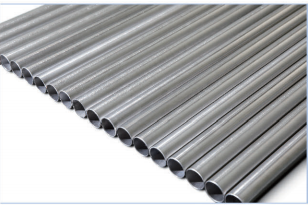
Titanium is preferred over stainless steel or carbon steel in seawater, chloride-containing, or acidic service because of its resistance to pitting and crevice corrosion. Applications in chemical processing, desalination plants, power generation, and offshore engineering use titanium for fluid transport, heat exchange, and critical process lines, where the requirement is long service life with minimal downtime. Upstream, those systems are built from coil, sheet, and plate, so the coil format decision taken at procurement determines what pipe and vessel fabricators can actually buy.
Comparison Table: Cold Rolled vs Hot Rolled Titanium Coil
Every value in this table is taken from the published product specifications for Xrun two coil formats. Where a grade or a standard is identical, the deciding factor is a process characteristic, not the material.
| Decision dimension | Cold rolled titanium coil / strip | Hot rolled titanium coil |
|---|---|---|
| Grades available | Gr.1, Gr.2, Gr.3, Gr.4, Gr.12, Gr.23 | Gr.1, Gr.2, Gr.3, Gr.4, Gr.12, Gr.23 |
| Thickness range | 0.1–3.0 mm | 2.5–12.0 mm |
| Width range | 450–1530 mm | 900–2000 mm |
| Delivery form | Coil (C) | Coil (C) |
| Reference standard | ASTM / ASME | ASTM / ASME |
| Process character | Cold reduction route, used for thin gauge and surface control | Hot reduction route, used for heavier gauge sections |
| Listed application industries | Electronic products; plate heat exchanger plates; anode plates; bipolar plates; batteries; eyeglass frames; household products | Chemical processing and industrial; aerospace; ship |
| Green energy fit | Thin, surface-sensitive components: heat exchange plates, bipolar plates, batteries | Heavier fabricated equipment and industrial process components |
| Commercial comparison basis | Cost per acceptable finished part after forming, testing, and documentation | Cost per acceptable finished part after cutting, forming, testing, and documentation |
| Where it usually wins | Thin-gauge, dimension-sensitive forming operations | Heavier sections with fewer forming steps |
Acceptance criteria reference for coil orders (heat exchanger applications)
| Acceptance item | Requirement |
|---|---|
| Governing standard | ASTM B265 or ASME SB-265 |
| Surface quality | No scratches, pits, or defects; degreased and passivated |
| Tensile strength | ≥ 240 MPa |
| Yield strength | 138–310 MPa |
| Elongation | ≥ 24% |
| Non-destructive testing | Ultrasonic or eddy current testing to confirm no internal flaws |
| Process performance | Cupping test and bend test to confirm formability |
| Surface condition | Pickled, polished, or as agreed |
| Project type | New project, retrofit, or spare parts procurement |
| Operating envelope | Media: seawater, chemicals, steam, brine; −50 °C to 300 °C; 1.0–2.5 MPa |

FAQ: Cold Rolled vs Hot Rolled Titanium Coil for Green Energy Buyers
1. Which standards and certification documents should I verify before ordering cold rolled or hot rolled titanium coil?
Start with the product standard, then move to market certification. Both Xrun coil formats are supplied to ASTM/ASME requirements, and ASTM B265 is the primary international standard for annealed titanium strip, sheet, and plate, covering the chemical and mechanical requirements for more than 32 grades. Heat exchanger specifications reference ASTM B265 or ASME SB-265, with tensile strength of at least 240 MPa, yield strength between 138 and 310 MPa, and elongation of at least 24%. For market-level evidence, ISO 9001:2015 is a common requirement on EU and US procurement checklists, and TUV-issued certification is frequently requested for the Indian market. Verify by matching the certificate holder to the contracting entity, reading the scope statement to confirm it covers coil or strip in the grades ordered, recording the issuing body and certificate number, confirming validity for the delivery window, and checking that lot-level material test documents travel with the goods.
2. Can one supplier deliver both cold rolled and hot rolled titanium coil in the grades my project needs?
Yes. Cold rolled titanium coil/strip and hot rolled titanium coil from Xrun are both offered in Gr.1, Gr.2, Gr.3, Gr.4, Gr.12, and Gr.23 to ASTM/ASME, so a project that mixes thin-gauge and heavy-gauge components does not have to run two parallel supplier qualifications. Capacity is the second half of the answer: Xrun states annual production capacity of more than 30,000 tons of titanium rolling coils and strips, supported by a chain running from coal and electricity through titanium ore and titanium sponge to processed mill products, and the company lists the EU, USA, and India as its main markets.
3. Is cold rolled titanium coil simply more expensive than hot rolled, and how should I compare them commercially?
Price per kilogram is the wrong unit of comparison, because it excludes the costs that actually differ: forming yield at the fabricator, inspection scope such as ultrasonic or eddy current testing and cupping and bend tests, documentation and certification verification, and rework or second-order risk. The two formats also use different process routes, so their cost structures are not directly comparable line by line. The workable approach is to quote both formats against the same acceptance criteria where the requirement falls inside the 2.5–3.0 mm overlap, then compare cost per acceptable finished part. Where only one format is technically valid, that decision is already made, and the commercial comparison should focus on supplier capability and supply continuity instead.
4. What should be checked on a sample coil before releasing a full order?
Six checks cover most green energy coil requirements. First, dimensions against the ordered window: 0.1–3.0 mm × 450–1530 mm for cold rolled, 2.5–12.0 mm × 900–2000 mm for hot rolled. Second, surface quality: no scratches, pits, or defects, with the strip degreased and passivated. Third, mechanical properties where heat exchanger criteria apply, namely tensile strength of at least 240 MPa, yield strength of 138–310 MPa, and elongation of at least 24%. Fourth, non-destructive testing by ultrasonic or eddy current method to confirm there are no internal flaws. Fifth, process performance through a cupping test and a bend test to confirm formability. Sixth, the final surface condition, whether pickled, polished, or as agreed in the purchase order. Once these checks pass on a sample, the same parameters should be fixed in the production lot documents.
5. How can I protect lead time and supply continuity when switching between cold rolled and hot rolled coil?
Lead-time risk is created before the order is placed, in two ways: a specification that only one process route can satisfy, and a supplier that has to source sponge or slab on the open market between lots. Where the application allows either format, keeping both in the qualified specification gives procurement a fallback. Where one supplier controls the chain from titanium sponge through coil rolling, production can be re-planned rather than re-sourced; Xrun stated capacity of more than 30,000 tons per year of titanium rolling coils and strips, inside an integrated chain from ore and energy inputs to finished coil, is the structure to look for. The practical next step for a live project is to send the application, grade, thickness, width, and acceptance criteria to Xrun and request a sample and a quotation against them; contact Simon Liu at simon.liu@xjxrun.com or (+86)18900759504 by phone or WhatsApp.
Conclusion: Decide by Application Fit, Then Verify Before You Commit
Cold rolled and hot rolled titanium coil are not competing products. They are two process routes covering different parts of the same specification sheet. Cold rolled titanium coil/strip covers 0.1–3.0 mm thickness and 450–1530 mm width and is listed for thin, surface-sensitive applications such as plate heat exchanger plates, bipolar plates, anode plates, and batteries. Hot rolled titanium coil covers 2.5–12.0 mm thickness and 900–2000 mm width and is listed for chemical processing and industrial, aerospace, and ship applications. Both are offered in Gr.1, Gr.2, Gr.3, Gr.4, Gr.12, and Gr.23 and both are supplied to ASTM/ASME, which is exactly why the decision cannot be made from the certificate alone or from the quoted price alone.
For green energy buyers in the awareness and research stage, the decision sequence is: define the forming operation, convert it into a thickness and width window, fix the grade and the product standard together, write the acceptance criteria into the order, verify certification evidence at product level for the market you are selling into, and validate with a sample before committing to a commercial lot. Where the requirement sits between 2.5 mm and 3.0 mm, quote both formats against identical criteria and compare cost per acceptable finished part.

Next Step: Sample, Quotation, and Documentation Pack
Xrun supplies cold rolled titanium coil/strip and hot rolled titanium coil in Gr.1, Gr.2, Gr.3, Gr.4, Gr.12, and Gr.23 to ASTM/ASME, backed by more than 30,000 tons per year of titanium rolling coil and strip capacity and an integrated chain from titanium ore and titanium sponge to finished coil. Send your application, grade, thickness, width, and acceptance criteria to receive a sample and a quotation against your specification.
- Email: simon.liu@xjxrun.com
- Phone / WhatsApp: (+86)18900759504
- Website: www.tixrun.com
- Product brochure (PDF): Download the Xrun titanium materials brochure
Have Questions or Need More Details?
Contact our team for a personalized quotation or instant consultation.
Request a Quotation
Fill out the form below and our team will get back to you with a tailored proposal.
WhatsApp Direct Chat
Prefer to chat in real-time? Message us on WhatsApp for instant assistance & quick answers.
- Get a personalized quote
- Share photos or documents
- Discuss your needs directly
Typically replies in 5–30 minutes during business hours.