
Titanium Coil Procurement: Avoid Risks, Maximize Efficiency
Sourcing titanium coil efficiently while mitigating supply chain risks is a top priority for procurement professionals in the chemical, petrochemical, aerospace, and medical device industries. This guide provides a structured framework for buyers to evaluate suppliers, verify credentials, and secure high-quality materials without costly delays or specification failures.
Defining the Procurement Challenge
Titanium coil, a critical raw material for heat exchangers, pressure vessels, and corrosion-resistant piping, requires strict adherence to ASTM B265 and other international standards. Buyers often face these recurring issues:
- Supplier authenticity: Difficulty distinguishing integrated manufacturers from traders who lack production control.
- Quality inconsistency: Variations in chemical composition, mechanical properties, and surface finish across batches.
- Certification gaps: Missing or fraudulent certificates (PED, NORSOK, Nadcap) leading to project rejection.
- Delivery unreliability: Inability to meet tight project timelines due to unstable raw material supply.
- Hidden costs: Unforeseen logistics, customs, or re-inspection expenses.

Xrun’s integrated headquarters and production base in Xi’an, China.
Industry Background: The Rise of Vertical Integration
The global titanium coil market is projected to grow steadily, driven by demand in desalination, chemical processing, and aerospace. China now accounts for over 40% of titanium sponge production, making Chinese suppliers essential partners. However, the supply chain structure varies widely—from small traders to fully integrated mills. Xrun represents the latter, operating China’s first end-to-end supply chain from “Coal – Electricity – Titanium Ore – Titanium Sponge – Titanium Processed Materials – Finished Products.” This vertical integration ensures stable raw material sourcing, consistent quality, and competitive pricing.
Detailed Solution: A 5-Step Procurement Framework
Step 1: Verify Supplier Background and Production Capacity
Request detailed company profiles, factory photos, and capacity statements. Integrated producers can provide traceability from sponge to coil. For example, Xrun’s annual capacity exceeds 30,000 tons of titanium rolling coils and strips, 10,000 tons of titanium composite strips, and 200,000 titanium composite disc pieces—indicating robust supply capability.
Step 2: Check International Certifications
Certifications are the first line of defense against quality risk. Prioritize suppliers holding:
| Certification | Relevance | Market |
|---|---|---|
| ISO 9001:2015 | Quality management system | Global |
| PED (Pressure Equipment Directive) | Pressure equipment compliance | EU |
| NORSOK M-650 | Norwegian oil & gas standards | North Sea |
| Nadcap (NDT & Heat Treating) | Aerospace process accreditation | Global aerospace |
| DNV Classification | Marine & offshore applications | Marine |
| EN9100:2018 | Aerospace quality management | Global aerospace |
Xrun holds all of the above, providing documented compliance across multiple regulated industries.
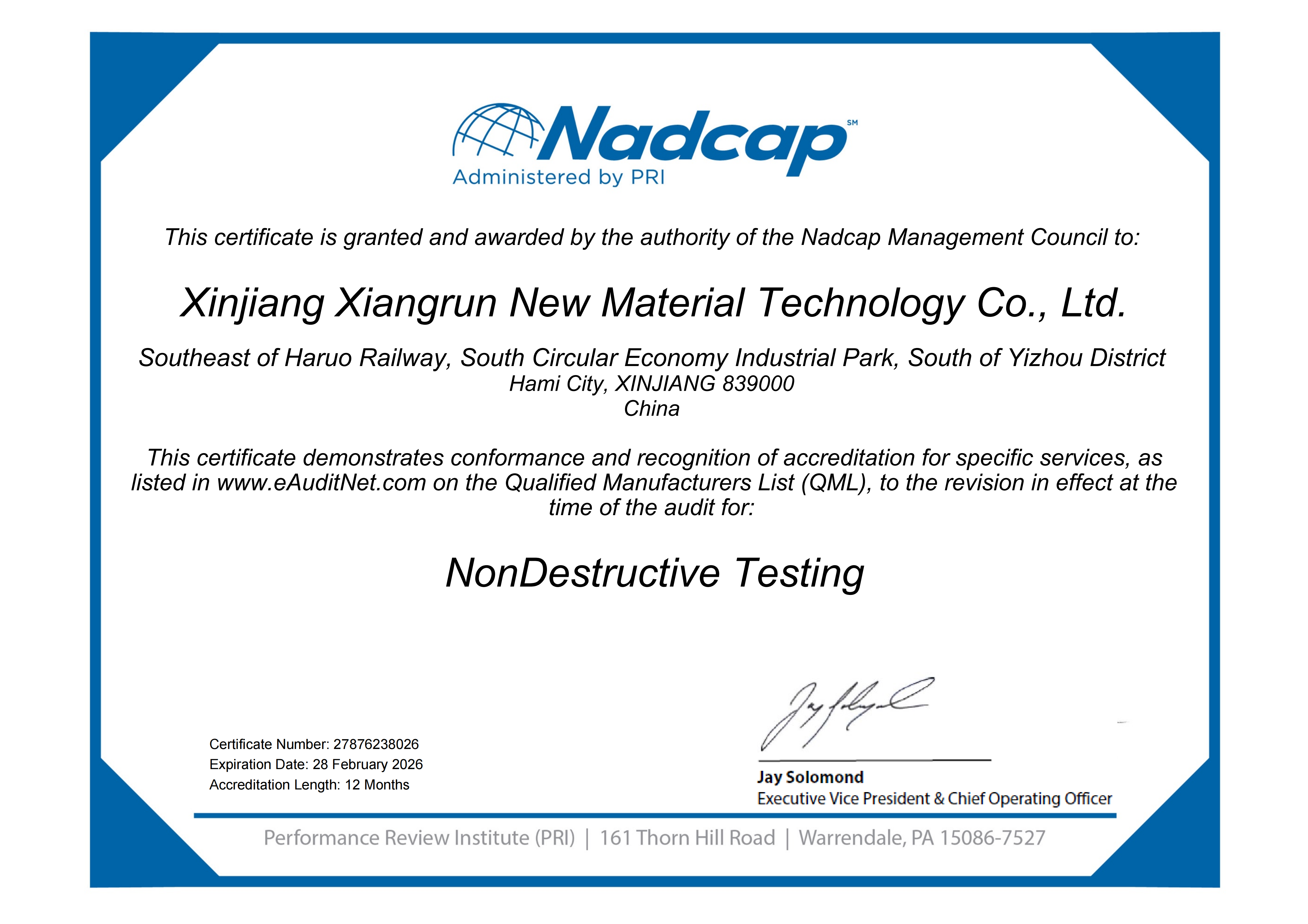
Nadcap NDT accreditation—a key indicator of aerospace-grade quality control.
Step 3: Evaluate Quality Control Processes
Ask about raw material sourcing, in-process inspection, and final testing. Integrated mills like Xrun control the entire chain: titanium sponge from captive sources, cold-rolling and hot-rolling lines with advanced automatic control systems, and comprehensive testing (chemical analysis, mechanical testing, ultrasonic inspection). Request sample test reports or witness testing if possible.
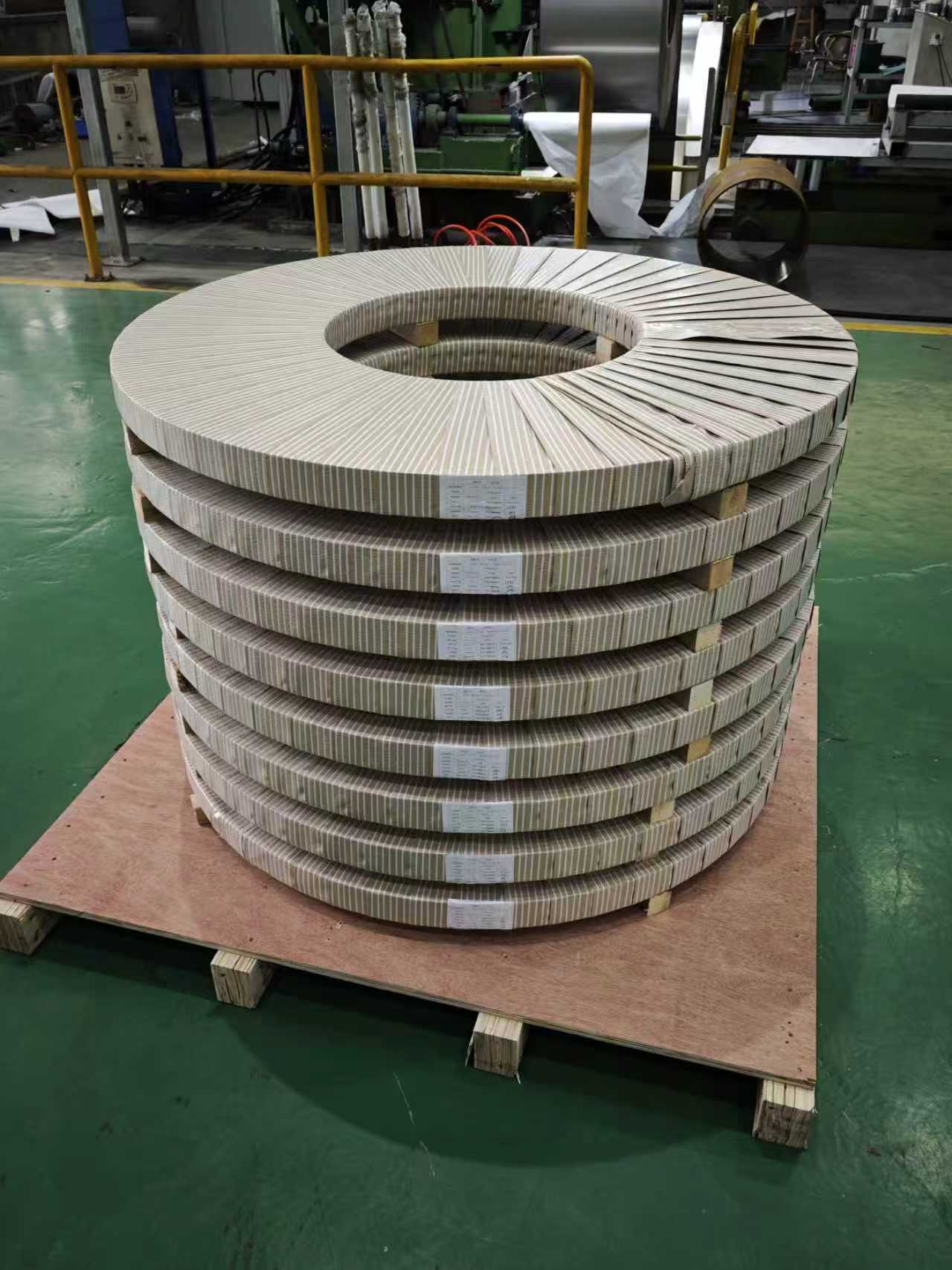
Cold-rolled titanium strip produced by Xrun’s integrated mill, ensuring consistent thickness and surface quality.
Step 4: Confirm Delivery and Logistics Capability
Assess lead times, minimum order quantities, and export experience. Xrun’s strategic location in Xi’an, with access to rail and sea ports, supports efficient global shipping. Their dedicated export team handles documentation, customs clearance, and compliance with destination country regulations (e.g., EU REACH, US ITAR).
Step 5: Build a Long-Term Partnership
Establishing a direct relationship with an integrated manufacturer reduces intermediary costs and ensures priority allocation during supply crunches. Request annual supply agreements, quality guarantees, and technical support. Xrun offers OEM/ODM services and can customize coil dimensions, surface finish, and packaging per buyer specifications.
Use Case: Petrochemical Heat Exchanger Coil Sourcing
A major European pressure vessel manufacturer needed ASTM B265 Grade 2 titanium coil for seawater-cooled heat exchangers. Key requirements included PED certification, NORSOK compliance, and delivery within 10 weeks. After evaluating traders, they selected Xrun because of:
- Full vertical integration guaranteeing sponge-to-coil traceability
- Valid PED and NORSOK certificates (see table above)
- Proof of previous shipments to EU projects
- Competitive pricing without compromising lead time
The project completed on schedule, with zero non-conformances during third-party inspection.
Frequently Asked Questions (FAQ)
How can I verify if a titanium coil supplier is a genuine manufacturer?
Request factory audit reports, video calls showing production lines, and independent certifications. Integrated producers like Xrun openly share facility details and certifications.
What is the standard minimum order quantity for titanium coil?
It varies by supplier. Xrun offers flexible MOQ from 500 kg for standard grades to negotiated volumes for custom specifications.
What payment terms are typical for international titanium coil purchases?
T/T (30% deposit, 70% before shipment) or L/C at sight are common. Integrated suppliers with strong financial standing may offer more favorable terms for long-term partners.
How do I ensure the coil meets ASTM B265 requirements?
Request mill test certificates (MTC) with each shipment, covering chemical composition and mechanical properties. Independent third-party inspection (SGS, Bureau Veritas) can be arranged.
Can I source custom dimensions (width, thickness, coil ID)?
Yes, many integrated mills offer customization. Xrun’s plate production line supports thin to medium-thick plates and can adjust coil parameters within their rolling capabilities.
Conclusion
Efficient titanium coil procurement demands a systematic approach: verify supplier background, check certifications (ISO, PED, NORSOK, Nadcap, DNV), evaluate quality control, and establish direct partnerships with integrated manufacturers. By following this framework, buyers can minimize risks, ensure compliance, and secure reliable supply.
For procurement professionals seeking a trusted partner with proven vertical integration, contact Xrun (Xiangrun (Xi'an) Titanium Materials Technology Co., Ltd.):
Simon Liu
Phone/WhatsApp: +86 18900759504
Email: simon.liu@xjxrun.com
Website: www.tixrun.com
Address: Room 11F/15F, Vanke Center, Weiyang Road, Xi’an, Shaanxi, China
Have Questions or Need More Details?
Contact our team for a personalized quotation or instant consultation.
Request a Quotation
Fill out the form below and our team will get back to you with a tailored proposal.
WhatsApp Direct Chat
Prefer to chat in real-time? Message us on WhatsApp for instant assistance & quick answers.
- Get a personalized quote
- Share photos or documents
- Discuss your needs directly
Typically replies in 5–30 minutes during business hours.