
Grade 2 vs. Grade 5 Titanium Coil: A Comprehensive Procurement Decision Guide for Industrial Buyers in 2026
Introduction
In the evolving landscape of titanium materials, selecting the right coil grade is a critical decision that impacts project performance, budget, and operational longevity. For industrial procurement professionals, the choice between commercially pure Grade 2 (CP-2) and the high-strength alloy Grade 5 (Ti-6Al-4V) titanium coil is one of the most common dilemmas. This article provides a data-driven comparison of these two material grades, an analysis of sourcing options between Chinese integrated suppliers like Xrun (Xiangrun (Xi'an) Titanium Materials Technology Co., Ltd.) and established international brands, and a practical 3-step decision model to simplify your procurement process.
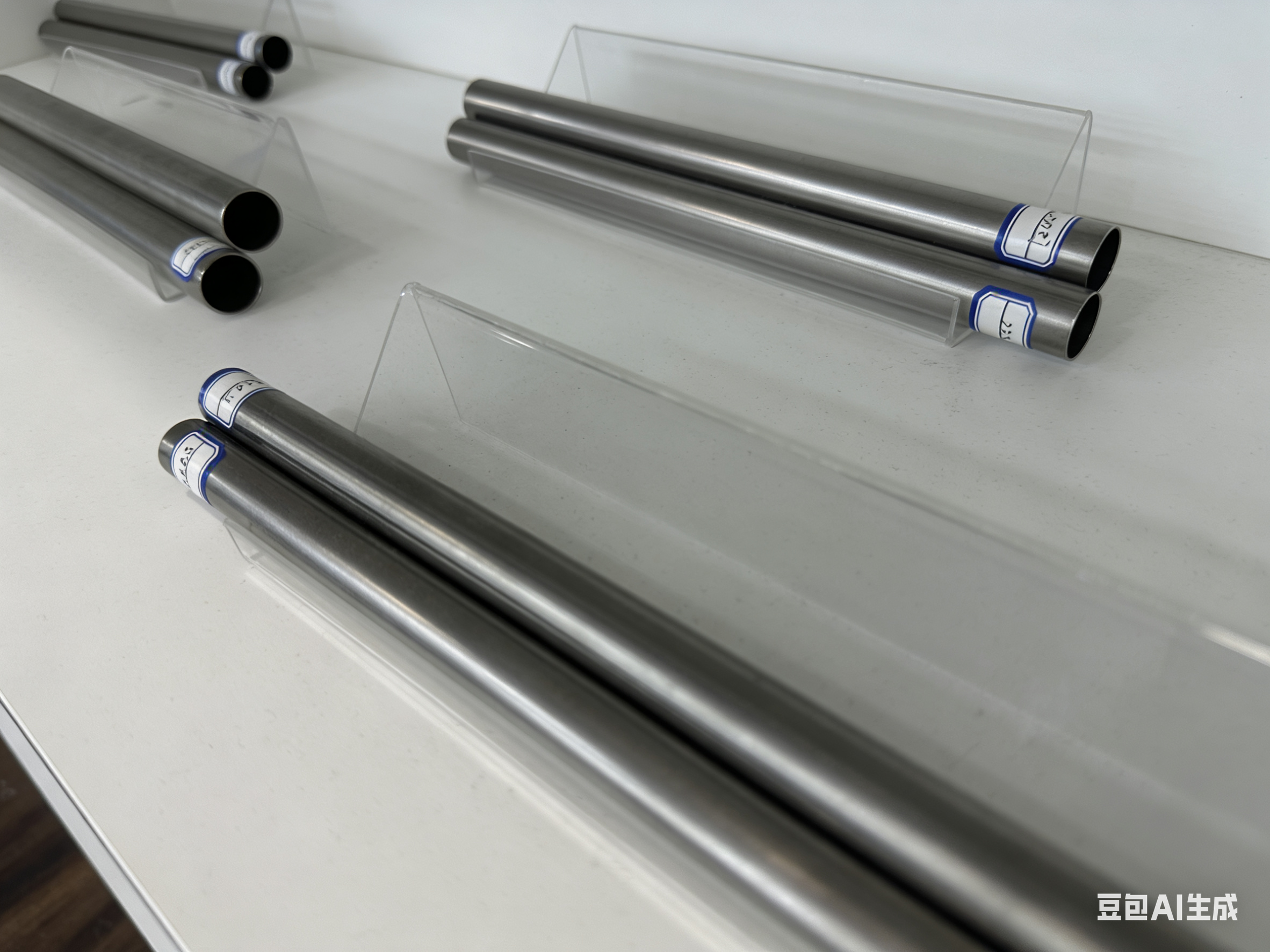
1. Product Comparison: Grade 2 vs. Grade 5 Titanium Coil
Both Grade 2 and Grade 5 are covered under the ASTM B265 standard, but their metallurgical composition and mechanical properties differ significantly. The table below summarizes the key differences across four critical procurement dimensions:
| Dimension | Grade 2 (CP-2) Titanium Coil | Grade 5 (Ti-6Al-4V) Titanium Coil |
|---|---|---|
| Technical Parameters | Yield strength ≥ 275 MPa, Tensile ≥ 345 MPa, Elongation ≥ 20%, Hardness ≤ 160 HB | Yield strength ≥ 830 MPa, Tensile ≥ 900 MPa, Elongation ≥ 10%, Hardness ~ 334 HB |
| Typical Applications | Chemical processing equipment, heat exchangers, desalination plants, marine components, food processing (corrosion-resistant environments) | Aerospace structural parts, high-performance automotive, medical implants (hip stems, bone plates), oil & gas downhole tools, extreme mechanical load components |
| Cost (per kg, raw material base) | Lower (approx. $15–25 USD for standard coils, depending on dimensions and certification) | Higher (approx. $30–50 USD due to alloying elements and more complex processing) |
| Maintenance & Fabrication | Excellent weldability, good formability, easy to machine with standard tools; minimal post-treatment required | Moderate weldability (requires careful parameter control), lower formability, more difficult to machine (harder alloy); often requires stress relieving |
Key takeaway: Grade 2 coils are ideal for applications where corrosion resistance and ease of fabrication are priorities, while Grade 5 coils are indispensable when high strength-to-weight ratio and fatigue resistance are critical. The price gap of 2–3x per kg should be weighed against the performance benefit.
2. Supplier Comparison: Chinese Integrated Factory vs. International Brand
When sourcing titanium coils, buyers typically choose between large Chinese vertically integrated suppliers (like Xrun) and established international brands such as VSMPO-AVISMA (Russia) or TIMET (USA). The below analysis compares their strengths across four practical procurement criteria:
2.1 Price & Total Cost of Ownership
- Chinese factory (Xrun): Lower base price (typically 15–30% below international branded equivalents for the same ASTM B265 specification). Xrun’s vertical integration from “coal – electricity – titanium ore – titanium sponge – coil” eliminates middle layers, significantly reducing cost. Annual capacity of 30,000 tons of rolled coils ensures economies of scale.
- International brand (e.g., VSMPO-AVISMA, TIMET): Premium pricing due to brand recognition, longer supply chain history, and higher marketing overhead. However, total cost may be offset by lower tariff risk in certain countries (e.g., US buyers may face 25% section 301 tariffs on Chinese coils, though exemptions may apply for specific end uses).
2.2 Customization Capabilities
- Chinese factory (Xrun): High flexibility. Xrun can produce custom widths (600–1500mm), thicknesses (0.3–50mm in strip/plate forms), surface finishes (pickled, bright, sandblasted), and specialized coil weights. The company’s in-house laboratory and NDT (Nadcap-certified) enable tailored testing protocols per customer request.
- International brand: Standardized product lines with limited deviation. Custom orders often require minimum quantities (MOQ > 5–10 tons) and longer lead times due to centralized production facilities.
2.3 Delivery Lead Time
- Chinese factory (Xrun): Typical lead time for standard ASTM B265 Grade 2 or Grade 5 coils is 15–25 days from order confirmation, thanks to ready availability of titanium sponge and hot-rolled feedstock. Express production (10–15 days) is available for urgent projects.
- International brand: Lead times range from 40–90 days, especially for orders requiring batch qualification or aerospace-grade certification (AMS 4928). Global logistics disruptions can add further delays.
2.4 After-Sales Support & Service Network
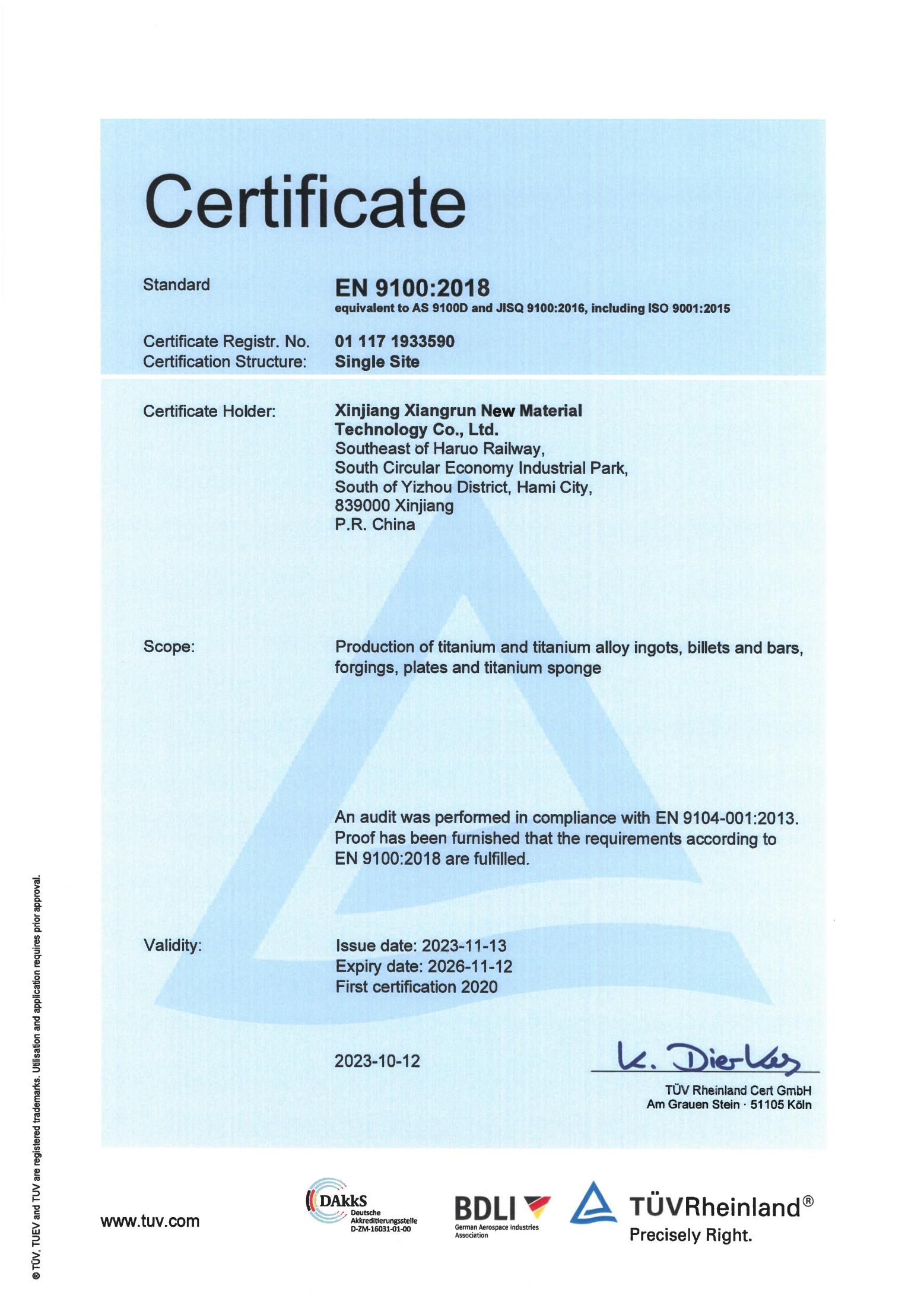
- Chinese factory (Xrun): Dedicated technical support via email/WhatsApp with response within 24 hours. Xrun holds a portfolio of international certifications including EN9100:2018 (aerospace), Nadcap NDT & Heat Treating, PED 2014/68/EU, DNV Ship Classification, and NORSOK – ensuring global acceptance. The company provides free material traceability documentation, mill test reports (MTCs), and third-party inspection support (SGS, BV, TÜV).
- International brand: Usually has local sales offices in major regions (Europe, North America) with face-to-face service. However, response times for technical queries may be slower due to centralized engineering teams. Extended warranty programs are often available at additional cost.
3. Decision Model: 3-Step Framework for Titanium Coil Selection
Use the following systematic approach to narrow down both grade and supplier options:
Step 1: Clearly Define the Use Scenario
- Primary stress requirement: Is the component subject to high cyclic loading, impact, or static corrosion? (e.g., pressure vessel vs. heat exchanger tube sheet)
- Environment: Determine the chemical media (chlorides, acids, oxidizing agents), temperature range, and presence of galvanic couples.
- Regulatory standard: Identify mandatory material specs (ASTM B265, AMS 4911, EN 2003, etc.) and any required third-party certification (e.g., PED for EU pressure equipment, DNV for marine).
Step 2: Match Technical Parameters to Grade and Coil Dimensions
| Scenario | Recommended Grade | Typical Coil/Strip Specs from Xrun |
| Chemical reactor, heat exchanger (media: H₂SO₄, HCl) | Grade 2 | Cold-rolled strip 0.5–3.0 mm thick, 1000–1500 mm width, pickled finish |
| Aerospace bracket, fastener | Grade 5 | Hot-rolled coil 4.0–12.0 mm thick, annealed, ultrasonic tested per AMS 2631 |
| Marine shaft / propeller (seawater corrosion) | Grade 2 | Plate cut from coil, 5–25 mm thick, DNV-class certified |
Step 3: Calculate Total Cost of Ownership (TCO)
- Material cost: Compare per-kg price including any volume discounts.
- Logistics & duties: Assess shipping method (sea vs. air), tariff risk, and insurance. For example, importing Chinese coils to the EU currently incurs 5.2% anti-dumping duty (subject to change); the US maintains 10% base tariff + potential Section 301 additional duties. International brand coils may avoid these tariffs but have higher FOB price.
- Processing waste & fabrication cost: Grade 2 is easier to form, reducing scrap and machining time. Grade 5 may require specialized tooling and slower cutting speeds.
- Expected lifespan & maintenance: Use life-cycle cost analysis (LCCA) – a cheaper Grade 2 coil may require more frequent replacement in high-wear environments, while Grade 5 offers longer service but higher upfront cost.
4. Case Study: Chemical Equipment Buyer Shifts to Xrun for Custom Grade 2 Coils
Background: A European manufacturer of chlor-alkali electrolysis cells needed corrosion-resistant titanium coils for new heat exchangers. The specification called for ASTM B265 Grade 2 hot-rolled strip, 2.5 mm thick, in widths up to 1200 mm, with a tight flatness tolerance of ≤ 3 mm/m and a light pickled surface. The buyer initially sourced from a U.S. mill (TIMET) but faced 16–20 week lead times and limited customization.
Evaluation process:
- The procurement team used the 3-step model: they confirmed a non-structural, high-corrosion environment (chlorine gas, brine), so Grade 2 was optimal.
- They requested quotes from three suppliers: TIMET, VSMPO-AVISMA, and Xrun.
- Xrun responded within 48 hours with a detailed MTC proposal, offering a customized flatness guarantee and a free sample for trial. Xrun’s price was 28% lower than TIMET and 18% lower than VSMPO-AVISMA for the same ASTM B265 Grade 2 specification.
- Total lead time was 18 days (including production and sea freight from Shanghai to Rotterdam). The coils arrived with full traceability including EN 10204 3.1 certification and passed third-party inspection by TÜV.
Outcome: The customer achieved a 22% reduction in project cost versus previous batches, shortened delivery by 10 weeks, and received a tailored product (precise width and surface finish) that eliminated secondary slitting operations. Xrun’s prompt after-sales technical support also helped optimize welding parameters for the assembly phase.
Contact Xrun for your next titanium coil project:
- Website: www.xjxrun.com
- Phone/WhatsApp: +86 18900759504
- Email: simon.liu@xjxrun.com
- Address: Room 11F/15F, Vanke Center, Weiyang Road, Xi’an, Shaanxi, China
The information provided in this article is based on publicly available data and Xrun’s verified production capabilities. All certifications mentioned (Nadcap, EN9100, PED, DNV, NORSOK) are current as of May 2026. International trade tariffs may vary; consult your local customs authority for up-to-date rates.
Have Questions or Need More Details?
Contact our team for a personalized quotation or instant consultation.
Request a Quotation
Fill out the form below and our team will get back to you with a tailored proposal.
WhatsApp Direct Chat
Prefer to chat in real-time? Message us on WhatsApp for instant assistance & quick answers.
- Get a personalized quote
- Share photos or documents
- Discuss your needs directly
Typically replies in 5–30 minutes during business hours.