
How to Select Corrosion-Resistant Titanium Materials for Critical Industrial Applications: A Comprehensive Guide
In demanding industrial environments where aggressive chemicals, high temperatures, and saline conditions are the norm, material failure is not an option. The selection of corrosion-resistant titanium components is a critical decision that impacts operational safety, maintenance costs, and project longevity. With the global push for more sustainable and durable infrastructure, understanding how to specify the right titanium grade and form for your application has never been more important. This guide provides a step-by-step framework for engineers, procurement specialists, and project managers to navigate the complexities of titanium application in harsh service conditions.
Step 1: Define the Application Environment and Key Requirements
The first and most crucial step is a thorough analysis of the operating environment. Titanium's excellent corrosion resistance is not universal; its performance varies based on alloy composition and the specific corrosive media present.
- Chemical Exposure: Identify all chemicals, their concentrations, temperatures, and pH levels. Titanium excels in oxidizing environments (like those containing chlorides, nitrates, or seawater) but can be susceptible to reducing acids without proper alloying.
- Mechanical & Thermal Stress: Determine operating pressures, temperatures (both steady-state and cycling), and any mechanical loads. This dictates the required strength and thickness of the material.
- Design Life & Safety Factors: Establish the expected service life and the necessary safety margins, which influence material grade selection and fabrication standards.
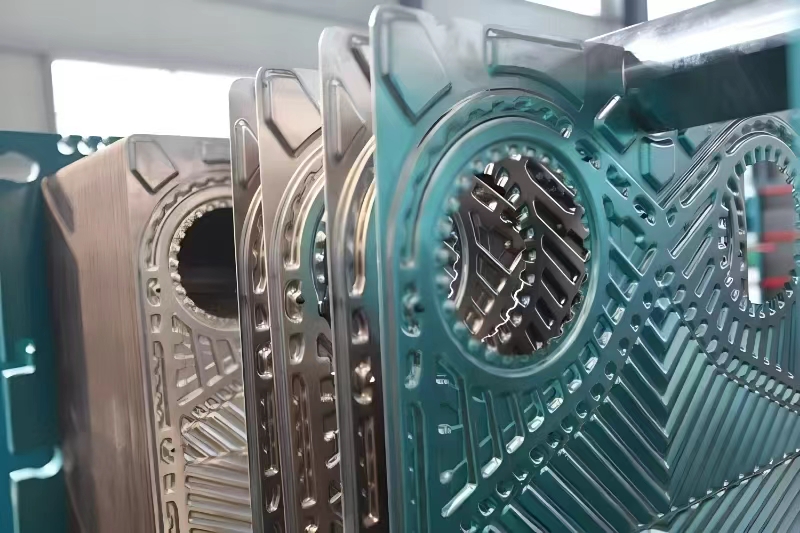
For components like Titanium Heat Exchanger Plates in a seawater cooling system, the primary concerns are pitting and crevice corrosion from chlorides. For Titanium Chemical Reactor Linings, resistance to a specific mix of acids at elevated temperatures is paramount.
Step 2: Select the Appropriate Titanium Grade and Product Form
Once the environment is defined, match it with the optimal titanium material. Commercially Pure (CP) grades and titanium alloys offer different property profiles.
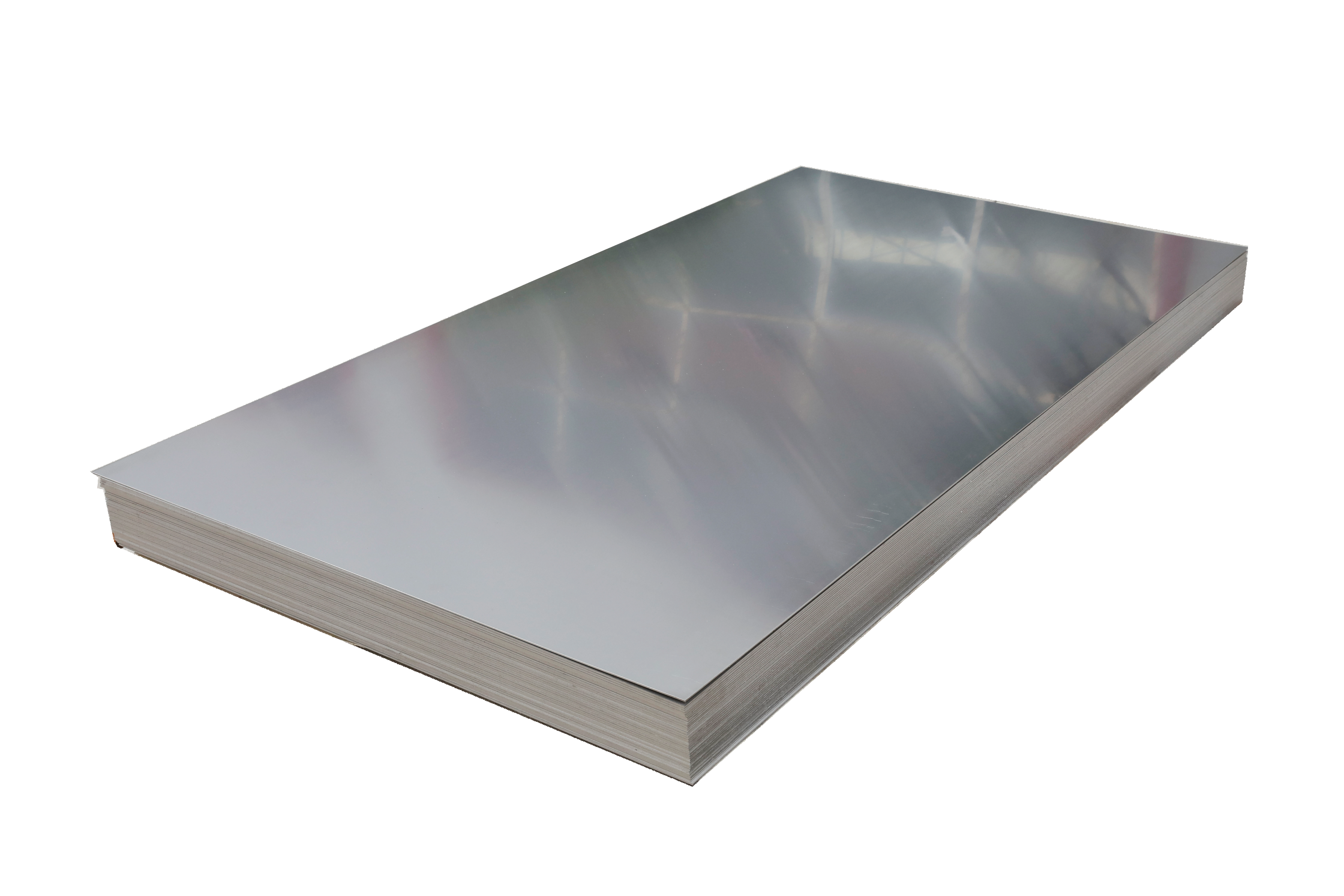
The product form is equally critical. For large containment vessels, Titanium Chemical Storage Tank Plates are fabricated from wide coils or sheets. For intricate internal components, such as Titanium Distillation Column Trays & Internals or Titanium Electrolysis Cell Frames & Plates, precision Titanium Industrial Stamping from strip or plate is often required.
Leading vertically-integrated manufacturers like Xrun (Xiangrun (Xi'an) Titanium Materials Technology Co., Ltd.) provide a full spectrum of forms. Their annual capacity of over 30,000 tons of titanium rolling coils and strips ensures availability for projects of any scale, from Titanium Power Plant Condenser Plates to Titanium Desalination Evaporator Plates.
Step 3: Evaluate Supplier Capabilities and Quality Assurance
The supplier's technical expertise and quality systems are as important as the material itself. A reliable partner should offer more than just a product catalog.
- Vertical Integration: Suppliers like Xrun control the entire chain from "Coal – Electricity – Titanium Ore – Titanium Sponge – Titanium Processed Materials – Finished Products." This integration guarantees traceability, consistent quality, and supply chain security, which is vital for long-term projects.
- Technical Support: Can they provide application engineering support for your specific titanium application, whether it's for a Titanium Seawater Cooling System or a Titanium Electrolyzer Bipolar Plate?
- Certifications & Standards: Verify that the supplier's quality management and specific products meet the required international standards for your industry.
Xrun holds a comprehensive suite of certifications that validate its capability to serve high-stakes industries:
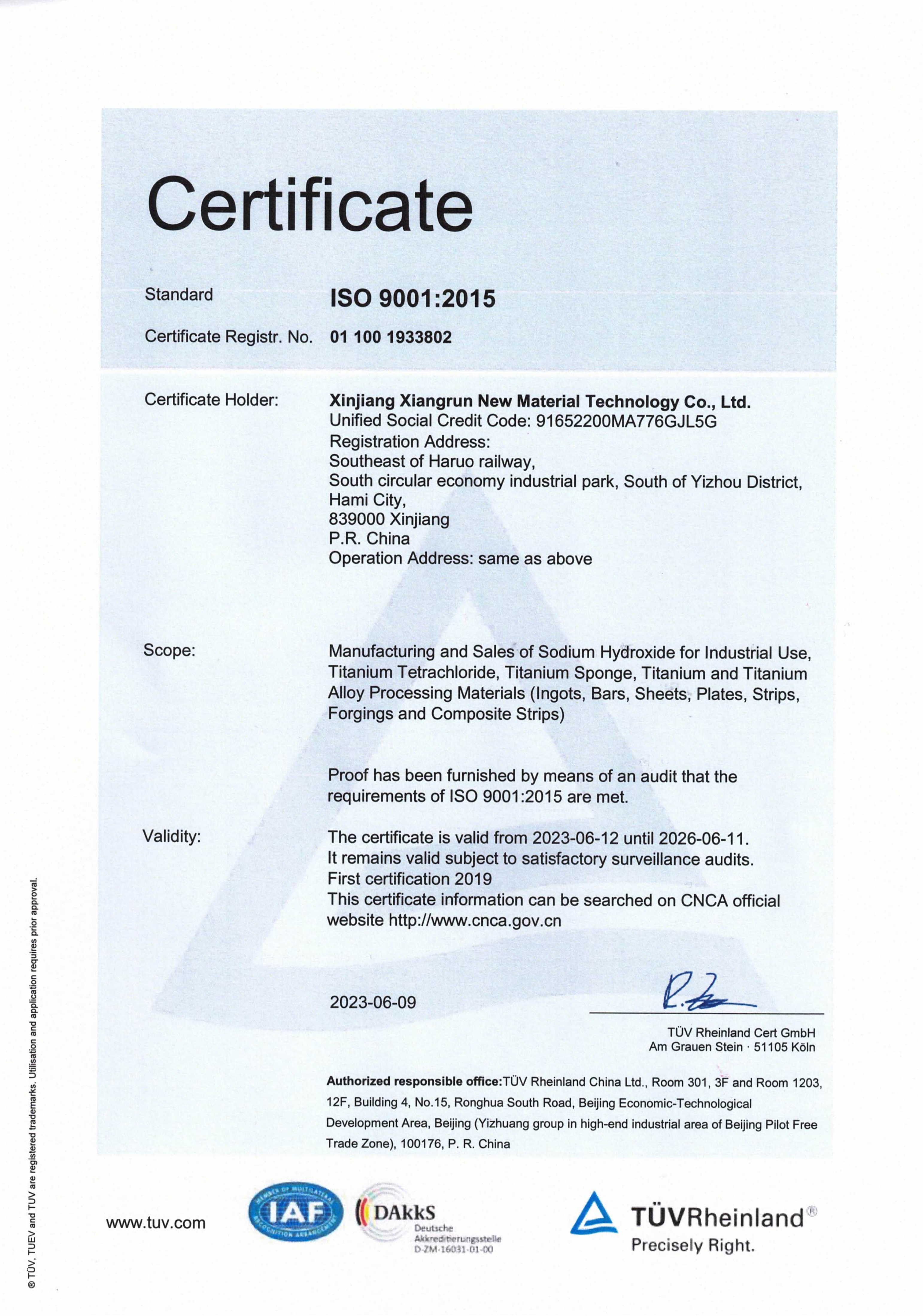
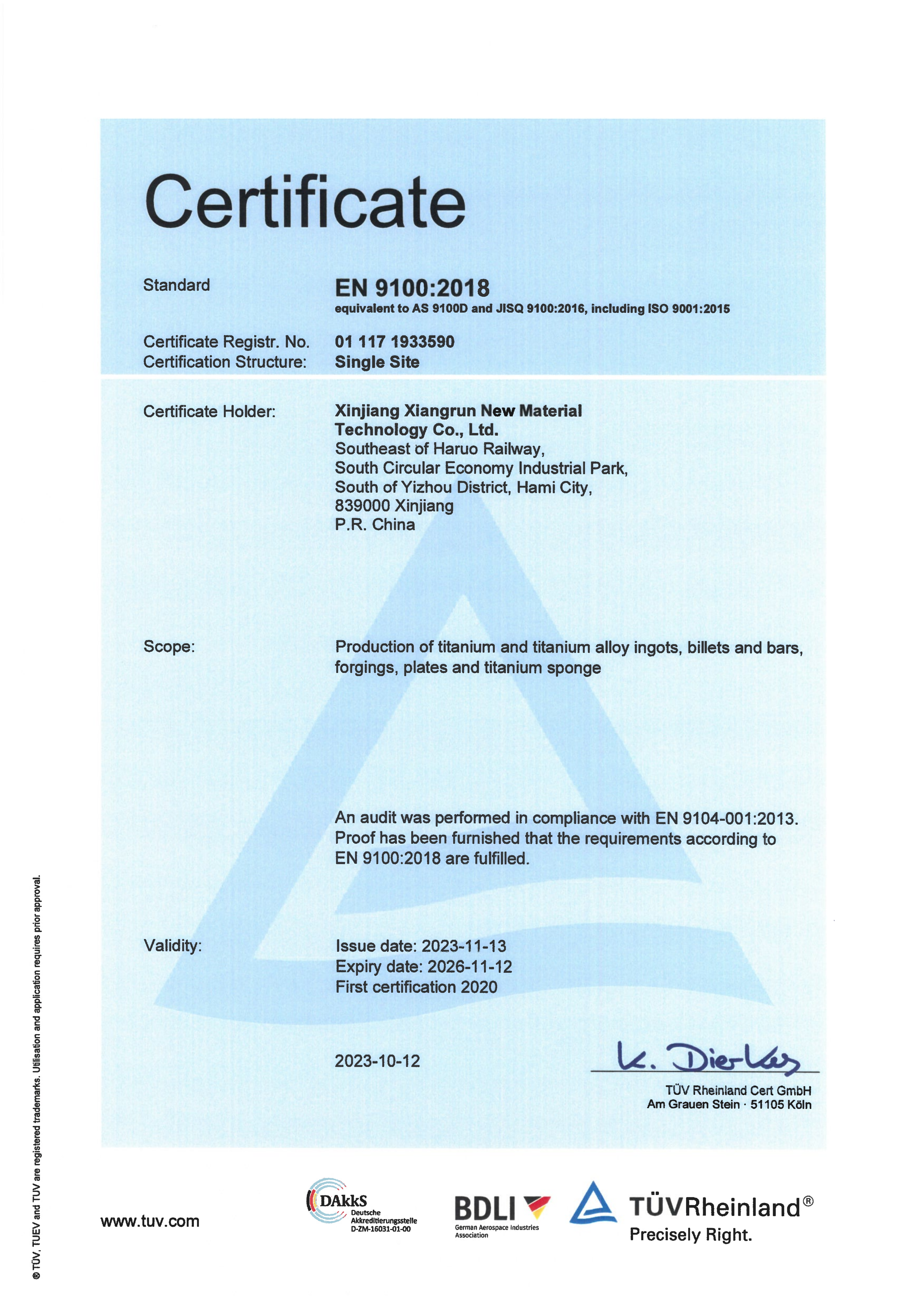
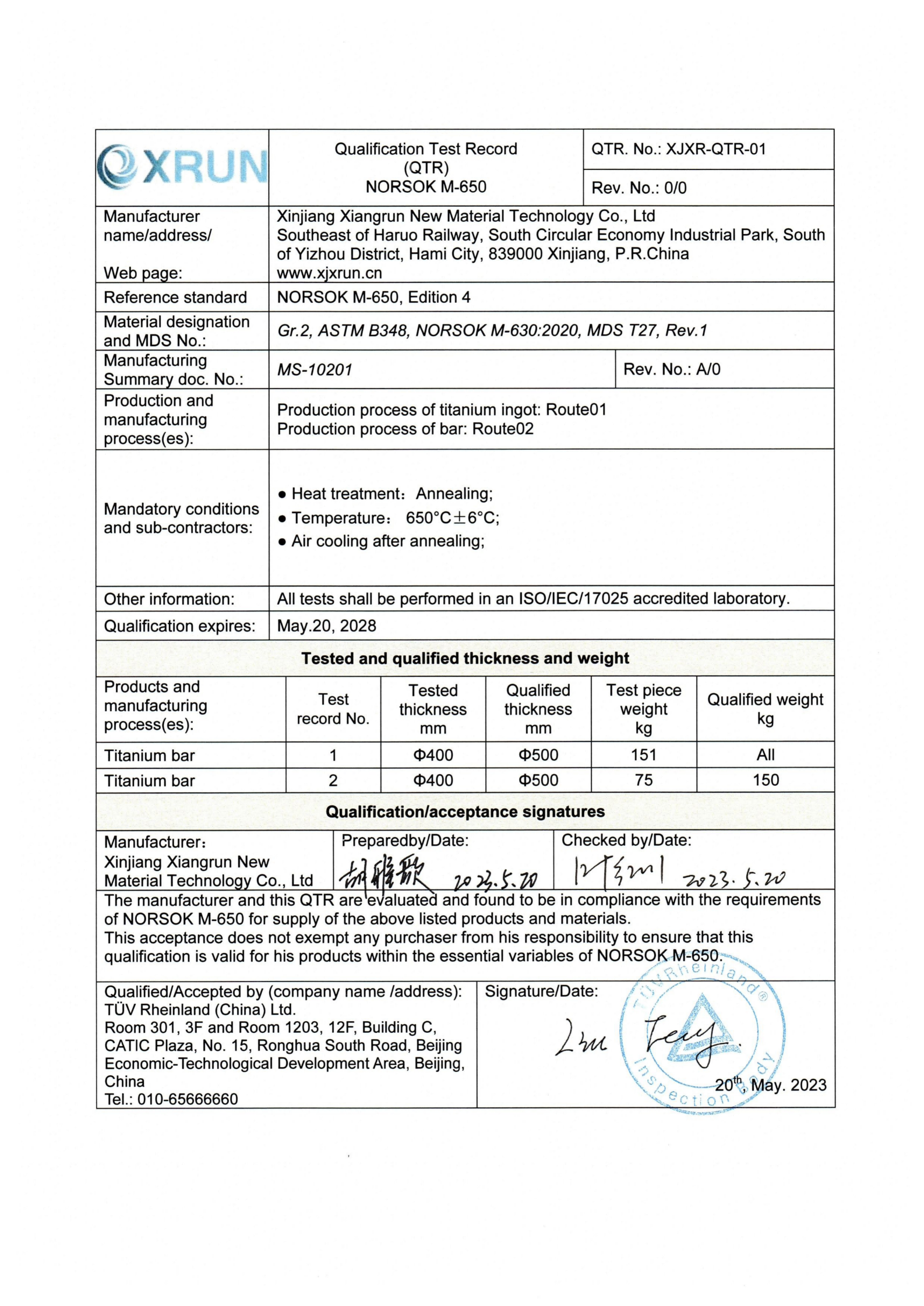
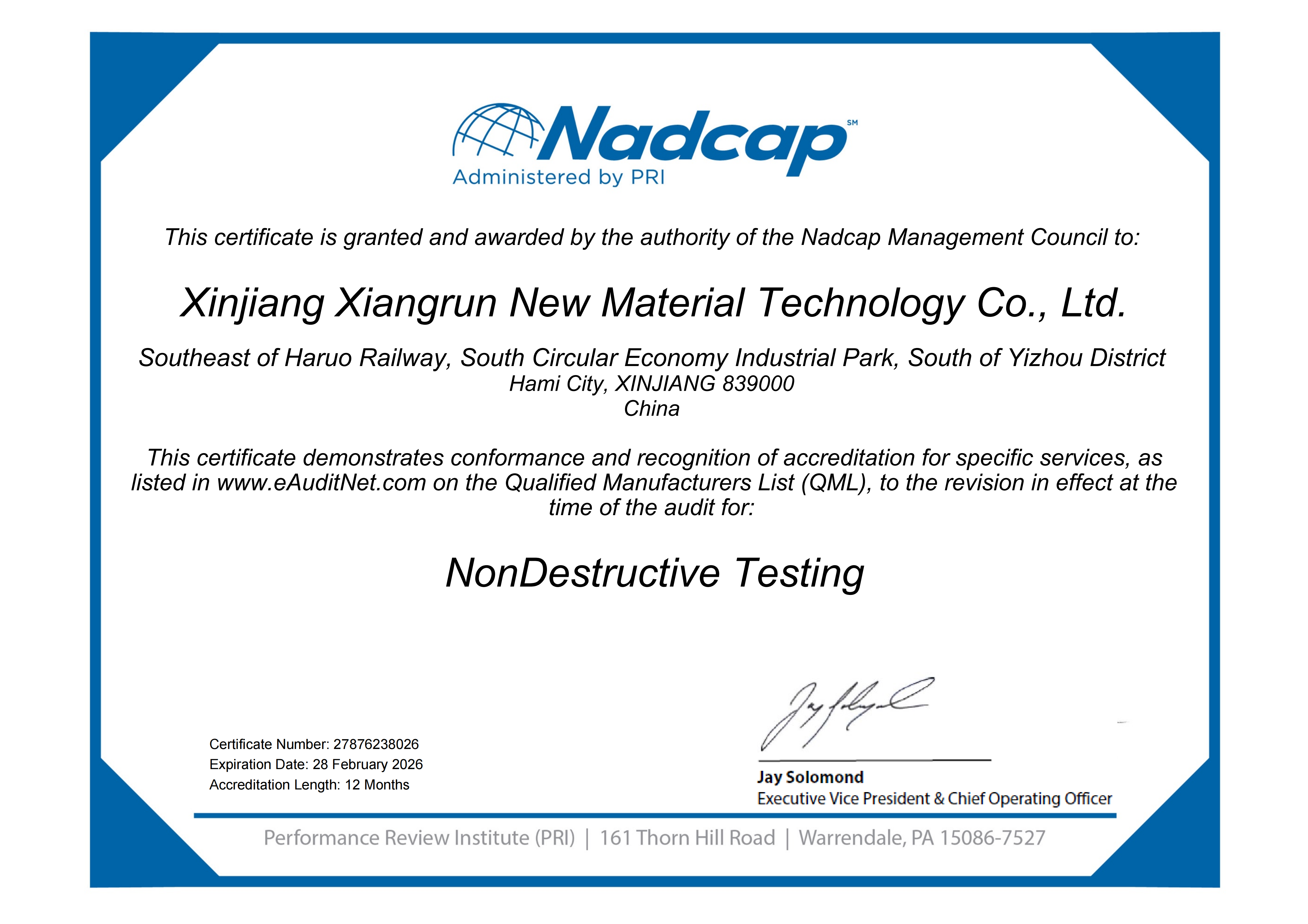
Certifications like Nadcap for non-destructive testing and heat treating, DNV for marine applications, and PED for pressure equipment are not just paperwork—they are proof of a manufacturer's commitment to producing reliable corrosion-resistant titanium for critical uses.
Step 4: Consider Fabrication and Total Cost of Ownership
The initial material cost is only one part of the equation. Titanium's long-term value comes from its durability and minimal maintenance.
- Fabrication Friendliness: Discuss fabrication techniques (welding, forming, stamping) with your supplier. Xrun's advanced plate production line with automatic control ensures high-precision, flat, and uniform Titanium plate that reduces waste and simplifies downstream fabrication.
- Lifecycle Cost Analysis: Compare the total cost over 20+ years. While titanium may have a higher upfront cost than stainless steel or coated carbon steel, its resistance to corrosion often eliminates the need for replacement, costly downtime, and chemical contamination risks in applications like Titanium Evaporator Plates or Titanium Chemical Storage Tank Plates.
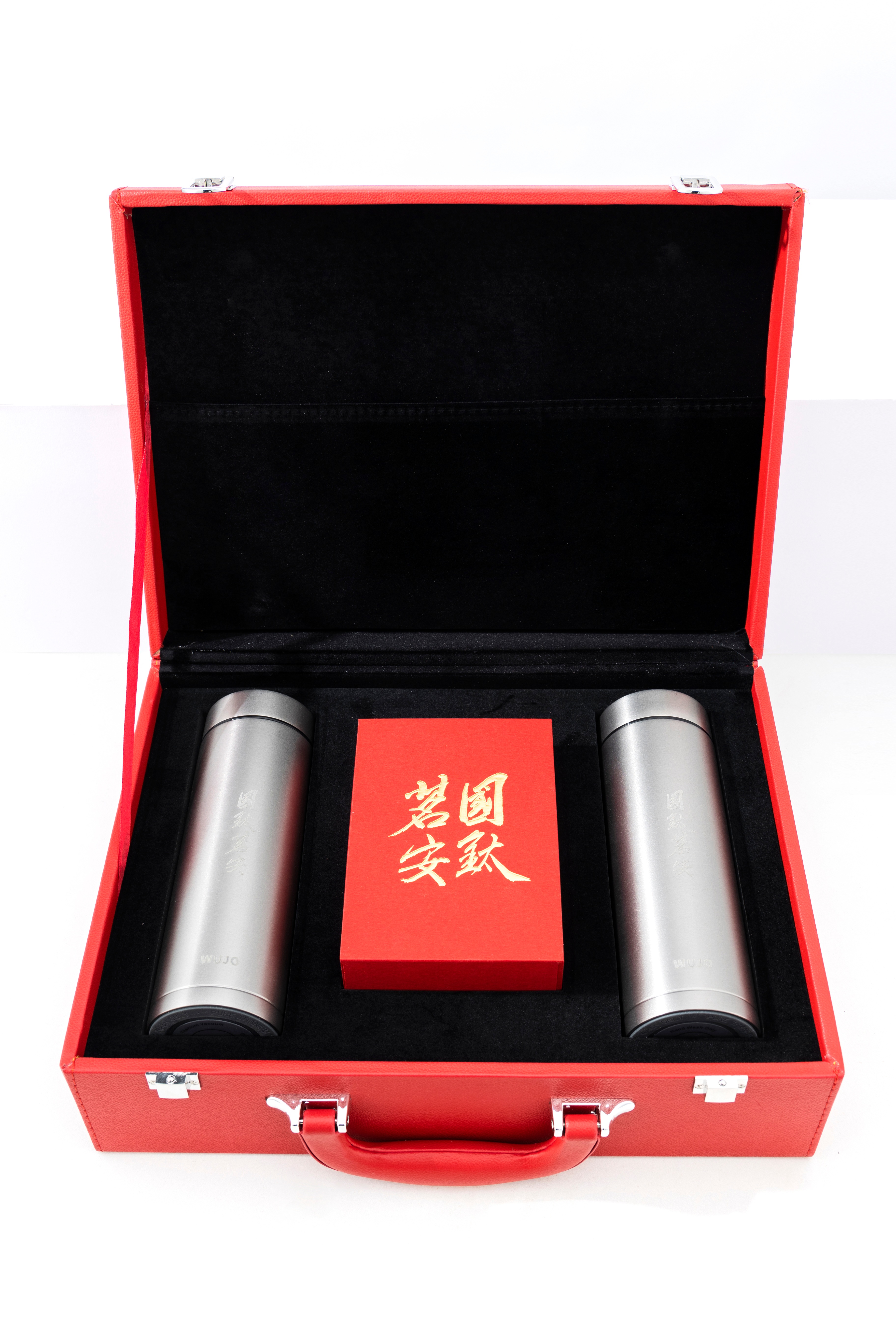
This principle extends beyond heavy industry. The same dedication to material purity and performance is found in Xrun's capabilities for consumer and specialty products like Titanium Button Cells, Titanium cups, Titanium tumblers, and Titanium woks, where safety and longevity are key consumer demands.
Step 5: Partner with a Solution-Oriented Titanium Expert
The final step is moving from a transactional purchase to a strategic partnership. The complexity of modern titanium application demands a supplier who acts as a technical resource.
A partner like Xrun brings value through its integrated supply chain, which allows for better responsiveness and customization. Whether your project requires Titanium Anodes for electrochemical processes, Titanium Electrodes for specialized manufacturing, or massive plates for Titanium Pressure Vessel Shells, a single-source provider can ensure consistency and accountability from raw material to finished component.
Ready to Specify Your Titanium Solution?
For engineers and buyers navigating critical material selection, partnering with an experienced, certified supplier is essential. Xrun offers the technical expertise, vertical integration, and quality assurance needed for success in the most demanding titanium applications.
Contact Xrun Today:
Phone/WhatsApp: +86 18900759504
Email: simon.liu@xjxrun.com
Website: http://www.xjxrun.com
Address: Room 11F/15F, Vanke Center, Weiyang Road, Xi’an, Shaanxi, China
By following this structured selection process, you can confidently specify corrosion-resistant titanium materials that will deliver decades of reliable, safe, and cost-effective service, ensuring the integrity of your most critical industrial assets.
Have Questions or Need More Details?
Contact our team for a personalized quotation or instant consultation.
Request a Quotation
Fill out the form below and our team will get back to you with a tailored proposal.
WhatsApp Direct Chat
Prefer to chat in real-time? Message us on WhatsApp for instant assistance & quick answers.
- Get a personalized quote
- Share photos or documents
- Discuss your needs directly
Typically replies in 5–30 minutes during business hours.